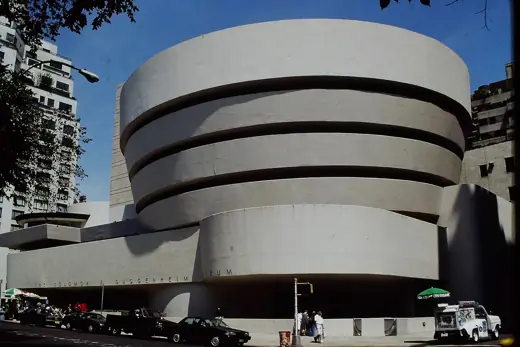
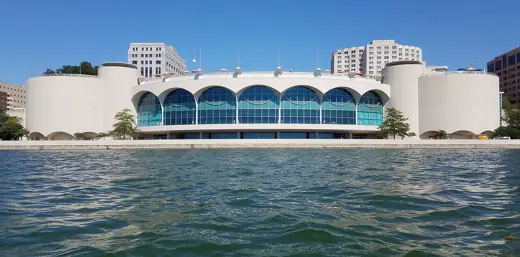
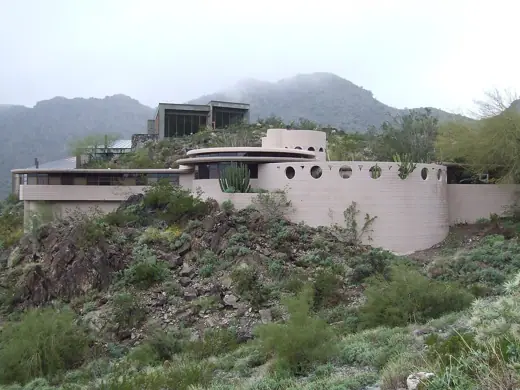
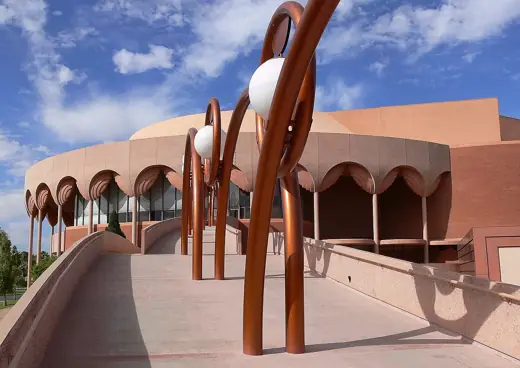
1/8 · Exterior · Opened in 1959Photo: Bmzuckerman · CC BY 4.0 · source2/8 · Exterior · The Solomon RPhoto: Epicgenius · CC BY-SA 4.0 · source3/8 · Exterior · Opened in 1959Photo: Bmzuckerman · CC BY 4.0 · source4/8 · Interior · Opened in 1959Photo: Bmzuckerman · CC BY 4.0 · source5/8 · Interior · Opened in 1959Photo: Bmzuckerman · CC BY 4.0 · source6/8 · Interior · Guggenheim CeilingPhoto: Tony Hisgett from Birmingham, UK · CC BY 2.0 · source7/8 · Detail · Opened in 1959Photo: Bmzuckerman · CC BY 4.0 · source8/8 · Model · Legoland California's Miniland features this model of the Guggenheim MuseumPhoto: mliu92 from San Mateo · CC BY-SA 2.0 · source
The Solomon R. Guggenheim Museum, often referred to as The Guggenheim, is an art museum at 1071 Fifth Avenue between 88th and 89th Streets on the Upper East Side of Manhattan in New York City. It hosts a permanent collection of Impressionist, Post-Impressionist, early Modern and contemporary art and also features special exhibitions throughout the year. It was established by the Solomon R. Guggenheim Foundation in 1939 as the Museum of Non-Objective Painting, under the guidance of its first director, Hilla von Rebay. The museum adopted its current name in 1952, three years after the death of its founder Solomon R. Guggenheim. It continues to be operated and owned by the Solomon R. Guggenheim Foundation.
Wright's design for the Guggenheim Museum incorporated geometric motifs, such as squares, circles, rectangles, triangles and lozenges. The massing contains two spiraling structures, the six-story main gallery to the south and the smaller "monitor" to the north, which are connected by a "bridge" on the second story. The ten-story rectangular annex, to the northeast, appears behind the spiraling structures as viewed from Central Park.