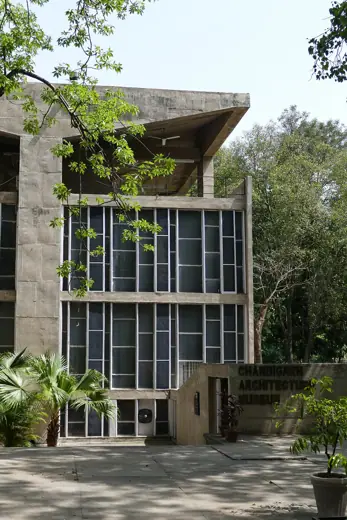
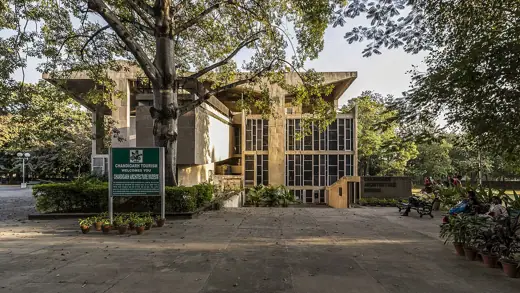
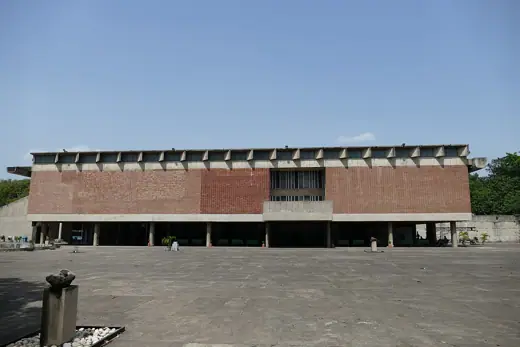
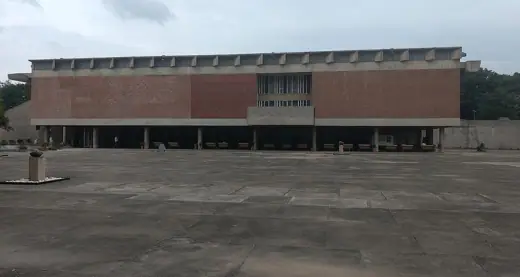
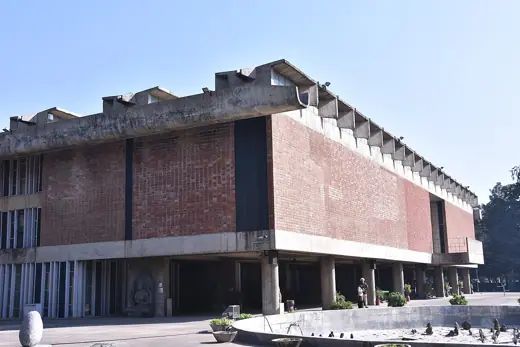
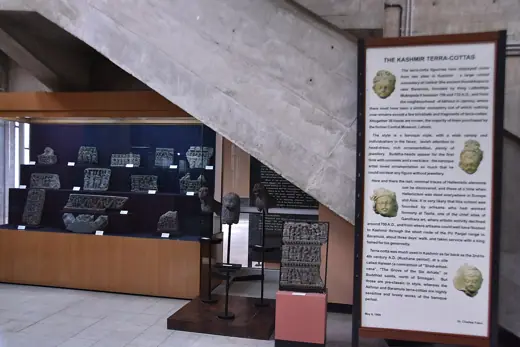
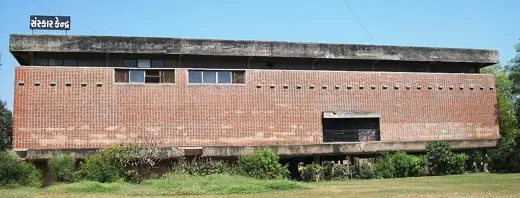
1/6 · Exterior · Architectural museum in Chandigarh, Punjab, IndiaPhoto: Kritzolina · CC BY-SA 4.0 · source2/6 · Exterior · Chandigarh Architecture Museum, Sector 10-CPhoto: Rhythm kataria · CC BY-SA 4.0 · source3/6 · Exterior · Art museum in Chandigarh, Punjab, IndiaPhoto: Kritzolina · CC BY-SA 4.0 · source4/6 · Exterior · Museum of art, ChandigarhPhoto: Shyamal L · CC BY-SA 3.0 · source5/6 · Interior · building of the Chandigarh Museum and Art GalleryPhoto: shankar s. from Poona (pune), India, India · CC BY 2.0 · source6/6 · Detail · Those paintings we've seen so far were no doubt amazing- there were some true masterpieces therePhoto: shankar s. from Poona (pune), India, India · CC BY 2.0 · source
Museum · Modernism
Government Museum and Art Gallery
Le Corbusier · Chandigarh, India · 1968
Key featuresBrick-clad gallery block on a concrete frame, a version of the square museum of unlimited growth.
Government Museum and Art Gallery, Chandigarh, is a public museum of North India having collections of Gandharan sculptures, sculptures from ancient and medieval India, Pahari and Rajasthani miniature paintings. It owes its existence to the partition of India. Prior to the partition, much of the collections of art objects, paintings and sculptures present here were housed in the Central Museum, Lahore, the then capital of Punjab. The museum has one of the largest collection of Gandharan artefacts in the world.
The building is a museum and art gallery which regularly conducts art acquisition programs for expansion. Envisaged as a vehicle for transmission of knowledge in the Second Five Year Plan and the National Education Policy, it serves as a unique cultural and historical resource for the region. Having a significant collection of Gandhara sculptures, Pahari miniature paintings and contemporary Indian art, it is regularly visited by tourists, artists, scholars and students. Researchers, architects and scholars on Le Corbusier and Modernization are also frequent visitors to the building and its surrounding. The ensemble to study its architectural values as it represents the series of museums designed by Le Corbusier. The pivoted entrance, metal-panelled door, fixed furniture, display systems, and exposed concrete sculpturesque gargoyles are symbolic of the prevailing style of Chandigarh's architecture.




.jpg)
.jpg)