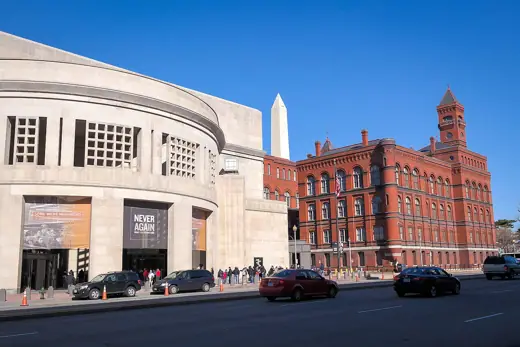
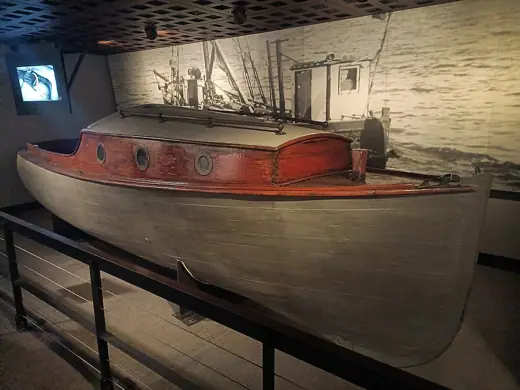
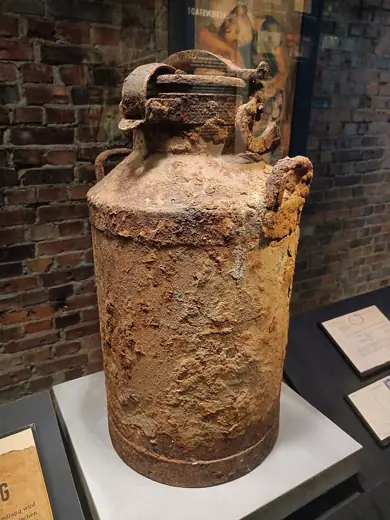
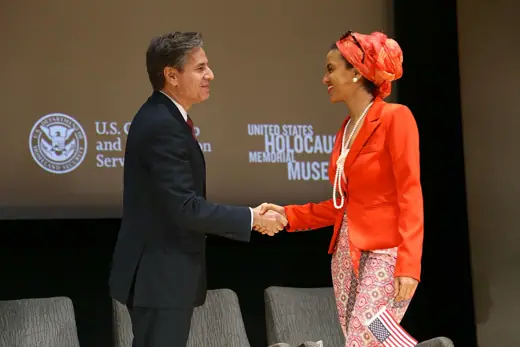
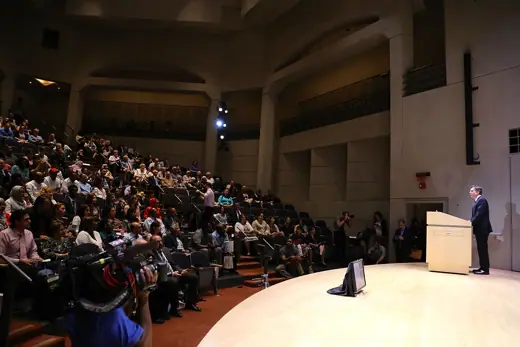
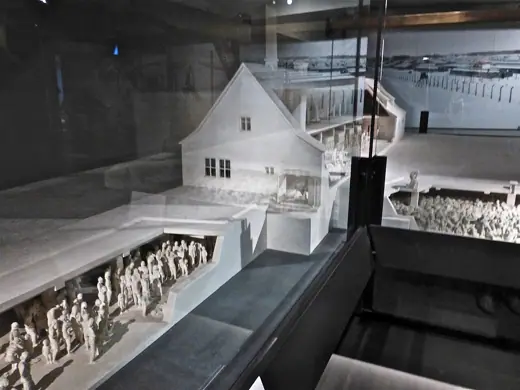
1/7 · Exterior · United States Holocause Memorial Museum and the Sidney RPhoto: Smash the Iron Cage · CC BY-SA 4.0 · source2/7 · Exterior · A Danish rescue boat in the collection of the United States Holocaust Memorial MuseumPhoto: Brigade Piron · CC BY 3.0 · source3/7 · Exterior · A milk churn used to hold documents from the Ringelblum archive in the Warsaw GhettoPhoto: Brigade Piron · CC BY 3.0 · source4/7 · InteriorPhoto: U.S. Department of State from United States · Public domain · source5/7 · InteriorPhoto: U.S. Department of State from United States · Public domain · source6/7 · InteriorPhoto: U.S. Department of State from United States · Public domain · source7/7 · Model · US Holocaust Museum (asphyxiation center model), Washington DCPhoto: MPSharwood · CC BY-SA 4.0 · source
Museum · Late modernism
United States Holocaust Memorial Museum
James Ingo Freed · Washington, D.C., US · 1993
Key featuresBrick, raw steel and a skylit Hall of Witness evoke camp architecture along a guided route.
The United States Holocaust Memorial Museum (USHMM) is the United States' official memorial and museum dedicated to the history and legacy of the Holocaust. Opened in Washington, D.C. in 1993, the museum explores the Holocaust through permanent and traveling exhibitions, educational programs, survivor testimonies and archival collections. The USHMM was created with the stated purpose of helping leaders and citizens of the world confront hatred, prevent genocide, promote human dignity, and strengthen democracy.
Designed by the architect James Ingo Freed of Pei Cobb Freed & Partners, in association with Finegold Alexander & Associates, the USHMM is created to be a "resonator of memory." Born to a Jewish family in Germany, Freed came to the United States at the age of nine in 1939 with his parents, who fled the Nazi regime. The outside of the building disappears into the neoclassical, Georgian, and modern architecture of Washington, D.C. Upon entering, each architectural feature becomes a new element of allusion to the Holocaust. In designing the building, Freed researched post-World War II German architecture and visited Holocaust sites throughout Europe. The Museum building and the exhibitions within are intended to evoke deception, fear, and solemnity, in contrast to the comfort and grandiosity usually associated with Washington, D.C., public buildings.




.jpg)
.jpg)
.jpg)
.jpg)
.jpg)
.jpg)