

Infrastructure · Historic precedent
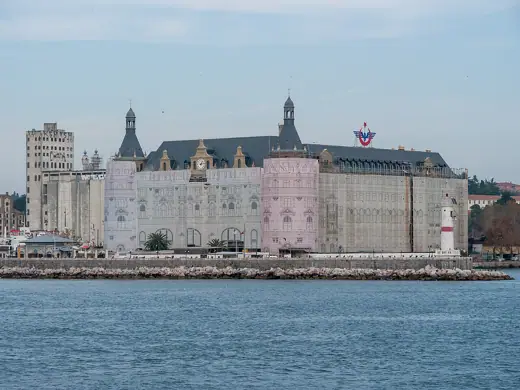
Haydarpaşa Terminal
Key featuresNeo-classical station on land reclaimed from the sea, resting on 1,100 wooden piles.
About the building
Until 2012 this was Istanbul's main terminal for trains serving the Anatolian side of Turkey. In 1904 Haydarpaşa became the northern end of both the Baghdad and Hejaz railways, and rising traffic called for a bigger building. The Anatolian Railway hired the German architects Otto Ritter and Helmut Conu, who chose a Neo-classical design; construction started in 1906. A steam hammer drove 1,100 timber piles, each 21 metres long, into the soft shore, and German and Italian stonemasons made the outside decoration. Completed on reclaimed land in August 1909, the terminal opened that 4 November, the birthday of Mehmed V. In 2010 a fire, caused by carelessness during restoration, destroyed the roof and the fourth floor. The original timber roof trusses, with their baroque influence, were later rebuilt, and the stone fronts were cleaned of salt from the nearby sea.
Sources: Haydarpaşa railway station (Wikipedia)
More with stoneAll 524 →
Find more with
Stone524 buildings →Monumentality909 buildings →Water306 buildings →Infrastructure223 buildings →Each opens every building that shares the idea.
Details
- Architect
- Otto Ritter, Helmut Conu
- Place
- Istanbul, Türkiye
- Year
- 1909
- Typology
- Infrastructure
- Movement
- Historic precedent
- Region
- Middle East