




Memorial · Historic precedent
Monument to the Battle of the Nations
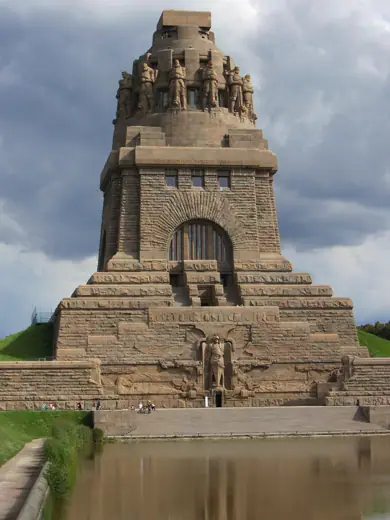
Key featuresMassive stepped stone monument over a pool, with a crypt of giant guardians and a domed hall.
About the building
Leipzig's Völkerschlachtdenkmal marks the 1813 Battle of the Nations. Funded mainly by donations and the city, it was completed in 1913, a century on. Unconvinced by the winning competition design, the Patriotic Association considered a third round but, to save time, gave Bruno Schmitz the job, then the most respected German architect. He raised the monument on an artificial hill and chose a pyramid form for clear views; the base is 124 metres square. Unlike many monuments of its era, it has no classicist details, drawing instead on ancient Mesopotamia and Egypt. Concrete, used extensively, is faced with granite. In the round crypt, a symbolic tomb for the fallen, sixteen warrior statues guard eight death masks 6 metres high, beneath a 68-metre dome. Of a larger ceremonial complex Schmitz planned, just a reflecting pool and two processional avenues were built.
Sources: Monument to the Battle of the Nations (Wikipedia)
More with monumentalityAll 909 →



Find more with
Monumentality909 buildings →Stone524 buildings →Water306 buildings →Memorial119 buildings →Each opens every building that shares the idea.
Details
- Architect
- Bruno Schmitz
- Place
- Leipzig, Germany
- Year
- 1913
- Typology
- Memorial
- Movement
- Historic precedent
- Region
- Europe

Go deeper




See all 9 links


More · MemorialAll 119 →




Portrait: Unknown author · Public domain · source