






Museum · Historic precedent
Victoria Memorial
Key featuresIndo-Saracenic memorial-museum in white Makrana marble, in 26 hectares of gardens, opened in 1921.
About the building
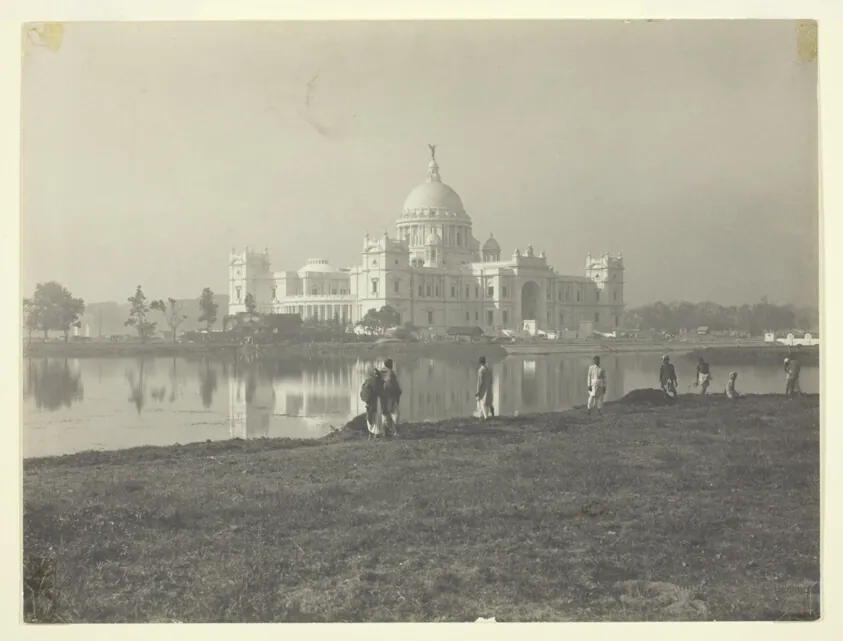
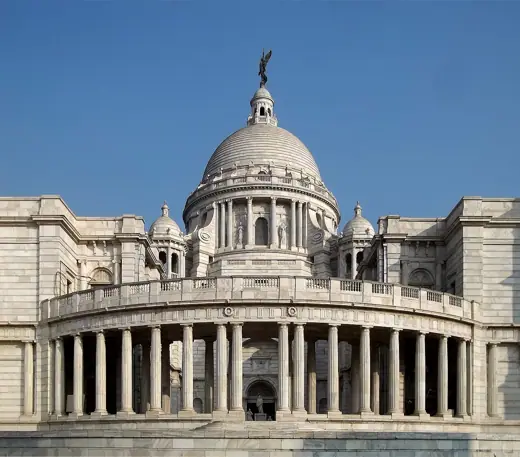
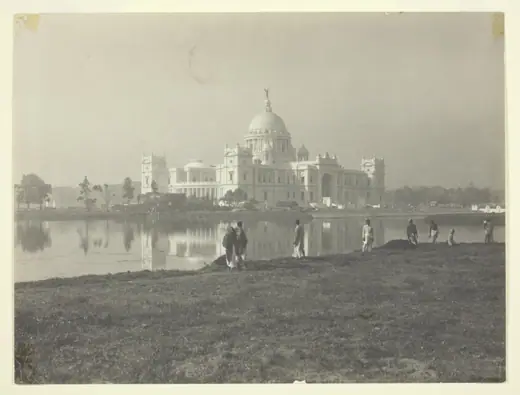
The British Raj built this memorial to Queen Victoria, Empress of India from 1876 until 1901, between 1906 and 1921. William Emerson designed it in the Indo-Saracenic style, combining British and Mughal features with ideas drawn from Venetian, Egyptian and Deccani building. Built of white Makrana marble, the building covers 103 by 69 m and rises 56 m. It recalls the Taj Mahal in its dome, chattris capped by octagonal domes, tall portals, a terrace and domed corner towers. Curzon set the central chamber's diameter at 20 m on purpose, so that it would slightly outdo the Taj Mahal. A 4.9 m Angel of Victory by Esch, cast by the Cheltenham firm H.H. Martyn & Co., stands on the central dome. Today the building is a museum under India's Ministry of Culture, within 26 hectares of gardens.
Sources: Victoria Memorial, Kolkata · William Emerson (British architect) (Wikipedia)
More with stoneAll 524 →
Find more with
Stone524 buildings →Axis319 buildings →Monumentality909 buildings →Museum735 buildings →Each opens every building that shares the idea.
Details
- Architect
- William Emerson
- Place
- Kolkata, India
- Year
- 1921
- Typology
- Museum
- Movement
- Historic precedent
- Region
- South Asia

Go deeper





See all 8 links


More · MuseumAll 735 →
Portrait: W.T. Pike (d.1924) · Public domain · source