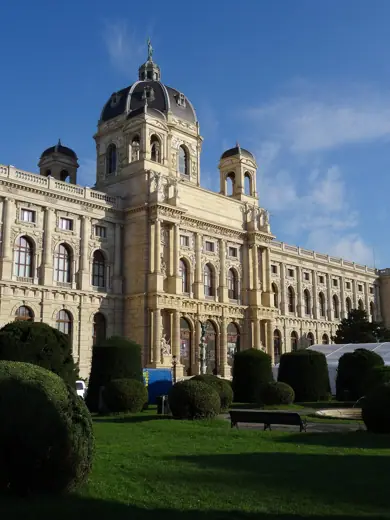
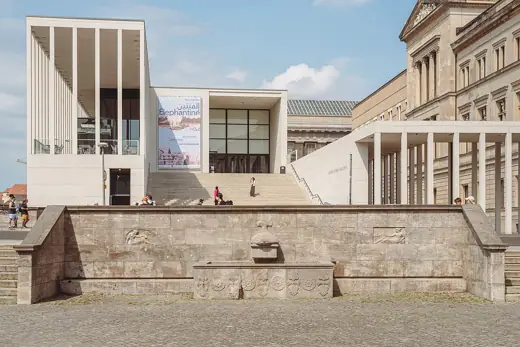
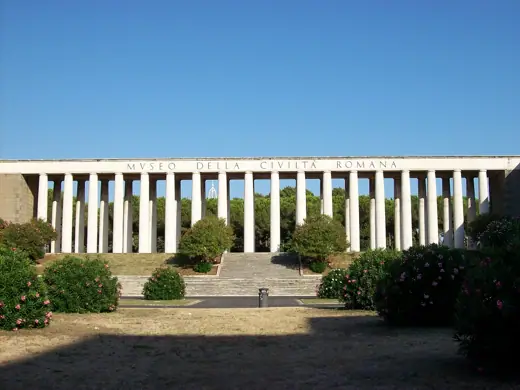
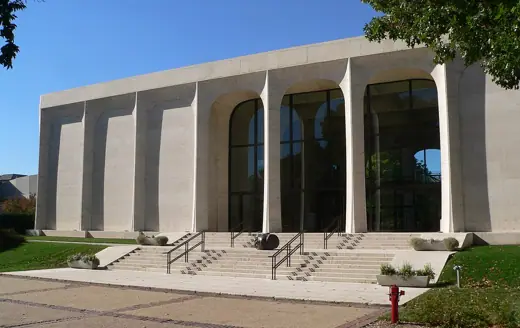
1/5 · Exterior · Naturhistorisches Museum Wien vom Maria-Theresien-Platz ausPhoto: Stb1er (Dario Premm) · CC BY-SA 4.0 · source2/5 · Exterior · Museum of Natural History, Vienna, AustriaPhoto: Carlos Delgado · CC BY-SA 3.0 · source3/5 · Interior · The half-moon shaped inner courtyard of the Narrenturm in ViennaPhoto: Guenter09 · CC BY-SA 3.0 · source4/5 · Interior · Vienna , situated on the Danube River , is the capital, largest city, and one of nine states of AustriaPhoto: Scotch Mist · CC BY-SA 4.0 · source5/5 · Detail · A wide-angle, daytime photograph showcases the grand facade of the Natural History Museum in Vienna, AustriaPhoto: Sandor Somkuti · CC BY-SA 4.0 · source
The Natural History Museum Vienna (German: Naturhistorisches Museum Wien) is a large natural history museum located in Vienna, Austria.
The historicism style of art and architecture was very popular in 19th century Austria.
The Natural History Museum Vienna incorporates stylistic elements from many past periods, in particular the Renaissance. Work began on the building in 1871 and the facade was finished in 1881. It is around 170 meters long and 70 meters wide, comprising two courtyards that are each surrounded by working and exhibition rooms. The roof is crowned with a 65 m dome bearing a huge bronze statue of the Greek sun god Helios, a symbol of the life-giving element without which nature would not exist. The upper and middle levels (mezzanine and first floor) of the intricately decorated facade display allegorical and mythological figures representing key elements of the universe and its discovery and understanding by man. On the balustrade visitors can see sculptures of researchers and scientists who represent the continuing progress of human knowledge. These fundamental ideas are also the basis for the sculptures and paintings in the Dome Hall and the grand staircase; the highlight here is Hans Canon's ceiling fresco, The Circle of Life.