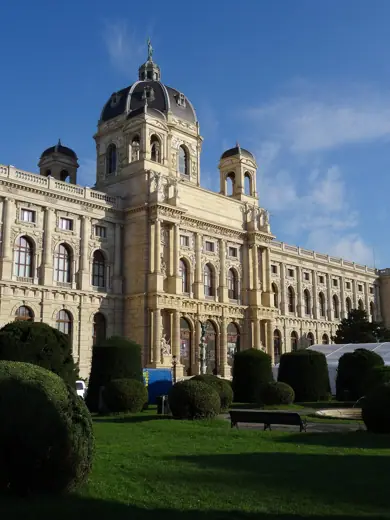
1/6 · Exterior · Berlin-MittePhoto: Manfred Brückels · Public domain · source2/6 · Exterior · Views from the cupola of the Berlin CathedralPhoto: Flocci Nivis · CC BY 4.0 · source3/6 · Exterior · Views from the cupola of the Berlin CathedralPhoto: Flocci Nivis · CC BY 4.0 · source4/6 · Exterior · Nationalgalerie und Kolonnaden - Alte Nationalgalerie - WestseitePhoto: Pascal Volk from Berlin, Germany · CC BY-SA 2.0 · source5/6 · Interior · The Alte Nationalgalerie in Berlin , GermanyPhoto: Phyrexian · CC BY-SA 4.0 · source6/6 · Interior · Interior view of Alte NationalgaleriePhoto: Wuselig · CC0 · source
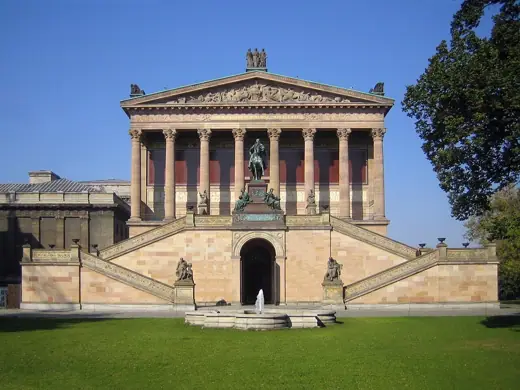
The Alte Nationalgalerie (lit. Old National Gallery) is a listed building on the Museum Island in the historic centre of Berlin, Germany. The gallery was built from 1862 to 1876 by the order of King Frederick William IV of Prussia according to plans by Friedrich August Stüler and Johann Heinrich Strack in Neoclassical and Renaissance Revival styles. The building's outside stair features a memorial to Frederick William IV. Currently, the Alte Nationalgalerie is home to paintings and sculptures of the 19th century and hosts a variety of tourist buses daily. As part of the Museum Island complex, the gallery was inscribed on the UNESCO World Heritage List in 1999 for its outstanding architecture and its testimony to the development of museums and galleries as a cultural phenomenon in the late 19th century.
The Alte Nationalgalerie, together with the Altes Museum, the Neues Museum, the Bode Museum, the Pergamon Museum, the Berlin Cathedral and the Lustgarten, make up the Museum Island complex in Berlin. It is situated in the middle of the island, between the rails of the Berlin Stadtbahn and Bode Street on the eastern banks.