




Culture & sport · Brutalism
SESC Pompéia

Key featuresA drum factory kept as a leisure centre, with new concrete towers linked by bridges.
About the building
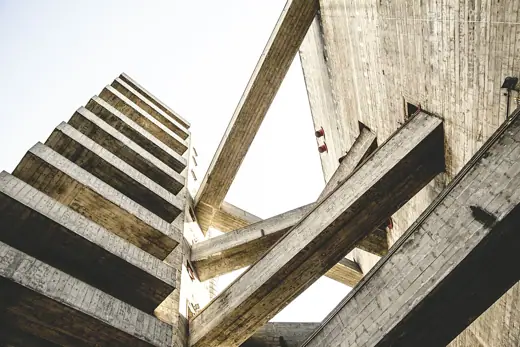
SESC Pompéia occupies what was once a factory for steel drums and refrigerators in São Paulo. From 1977 to 1986 Lina Bo Bardi converted it for the non-profit Serviço Social do Comércio into a leisure and recreation centre for the working class. It was among her largest and most important projects and an early case of adaptive reuse. Her priority was to keep and amplify the life that neighbours had brought to the place, so she insisted the industrial buildings stay. She stripped old plaster and sandblasted the walls to expose the factory's rough concrete, and had rough windows knocked through and fitted inside with bright red sliding screens. At the back she added two concrete sports towers, pierced by globular windows and linked by eight walkways. The building is valued for both its architectural and social qualities.
Sources: SESC Pompeia · Lina Bo Bardi (Wikipedia)
More by Lina Bo BardiAll 4 →
More with adaptive reuseAll 195 →
Find more with
Adaptive reuse195 buildings →Exposed concrete542 buildings →Public space617 buildings →Culture & sport614 buildings →Each opens every building that shares the idea.
Details
- Place
- São Paulo, Brazil
- Year
- 1986
- Typology
- Culture & sport
- Movement
- Brutalism
- Region
- Americas
Go deeper




See all 9 links


More · Culture & sportAll 614 →
Portrait: Unknown author · Public domain · source