




Pavilion · Historic precedent
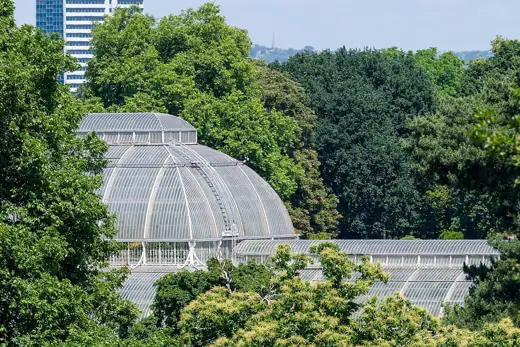
Palm House, Kew Gardens
Key featuresDescribed as the first large-scale structural use of wrought iron, with an upper walkway.
About the building
Completed in 1848 at Kew, the Royal Botanic Gardens in London, the Palm House grows palms and other plants from the tropics and subtropics. In 1844 Sir William J. Hooker, Kew's director since 1841, asked Decimus Burton for early sketches as part of a plan to lift the garden's image. The iron-maker Richard Turner built it. Turner's first plans were Gothic, which Burton at first opposed, and the final design follows Burton's preferred Neoclassical style. No greenhouse had been built at this scale before, and no earlier building had used wrought iron structurally on such a scale. An upper walkway rises among the larger plants, which include the world's oldest pot plant. Kew said in 2025 that the house would close in 2027 for a five-year, £50 million renovation to make it carbon neutral.
Sources: Palm House, Kew Gardens (Wikipedia)
More with steel & glassAll 519 →
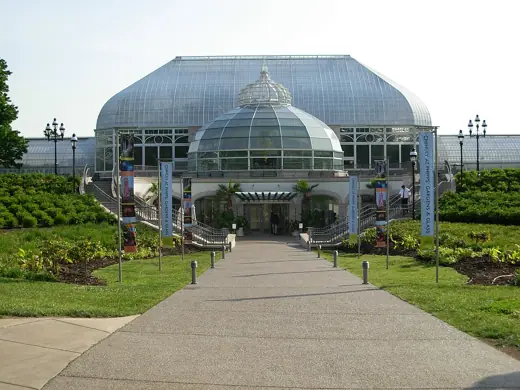
Find more with
Steel & glass519 buildings →Structure as expression668 buildings →Planting115 buildings →Pavilion58 buildings →Each opens every building that shares the idea.
Details
- Architect
- Decimus Burton and Richard Turner
- Year
- 1848
- Typology
- Pavilion
- Movement
- Historic precedent
- Region
- Europe

Go deeper




See all 9 links


More · PavilionAll 58 →
Portrait: Unknown author · Public domain · source