

Palace · Regionalism
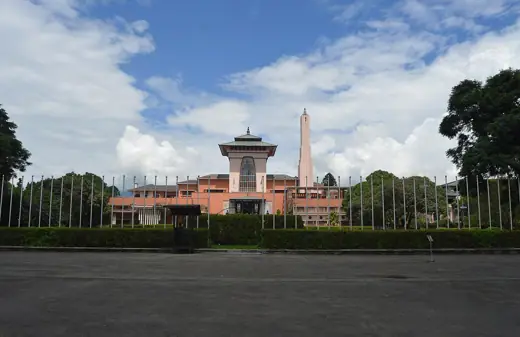
Narayanhiti Palace Museum
Key featuresRoyal palace using Nepalese building styles as a national symbol; designed by Benjamin Polk, begun 1963.
About the building
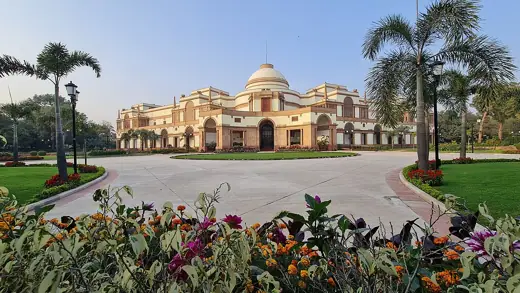
In 1963 King Mahendra ordered the old Narayanhiti Palace in Kathmandu replaced. Benjamin Polk, an American architect living in India, designed the new one, drawing on Nepalese architectural styles so that it would stand as a national symbol, and building work ended in 1969. Until the 2006 revolution it was the home and main workplace of Nepal's monarch and hosted state occasions; in 2008 the complex became a museum. Its 3,794 m² of floor space divides into guest, state and private wings. A central tower rises over the front, growing out of the Hindu temple below it. In the Gorkha Baithak, built on Hindu temple lines, a 48-foot chandelier hangs from a pagoda-style ceiling 60 feet high, carried on four concrete columns that stand for the Nāga and are decorated with the guardian demigods Astha Matrikas and Ashta Bhairava.
Sources: Narayanhiti Palace Museum (Wikipedia)
More with axisAll 319 →
Find more with
Axis319 buildings →Monumentality909 buildings →Courtyard325 buildings →Palace44 buildings →Each opens every building that shares the idea.
Details
- Architect
- Benjamin Polk
- Place
- Kathmandu, Nepal
- Year
- 1969
- Typology
- Palace
- Movement
- Regionalism
- Region
- South Asia