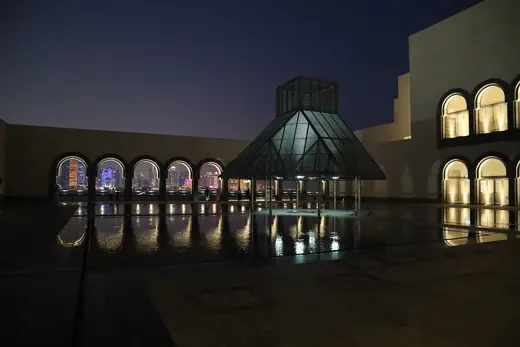
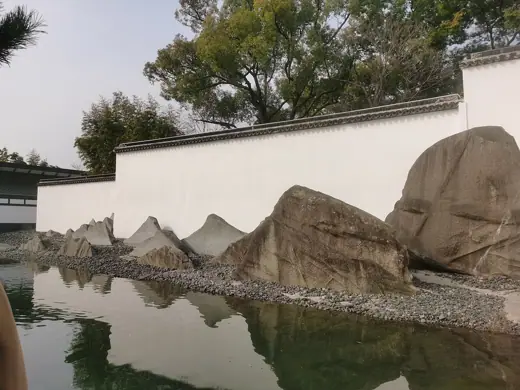
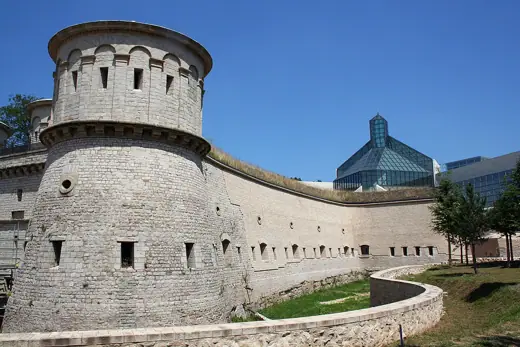
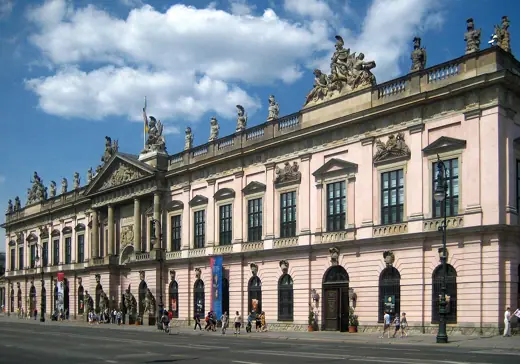
1/5 · Exterior · Doha Museum of Islamic ArtPhoto: Francesco Bini · CC BY-SA 4.0 · source2/5 · ExteriorPhoto: لا روسا · CC BY-SA 4.0 · source3/5 · Interior · The view on city skylines from the Museum of Islamic ArtPhoto: Marek Śliwecki · CC BY-SA 4.0 · source4/5 · Interior · Doha Museum of Islamic ArtPhoto: Francesco Bini · CC BY-SA 4.0 · source5/5 · Interior · Doha Museum of Islamic ArtPhoto: Francesco Bini · CC BY-SA 4.0 · source
Portrait: original work: Unknown author derivative work: Yekrats · Public domain · source
About Museum of Islamic Art
The Museum of Islamic Art (MIA; Arabic: متحف الفن الإسلامي) is a museum at one end of the seven-kilometer-long (4.3 mi) Corniche in Doha, Qatar. As per architect I. M. Pei's specifications, the museum is built on an island on an artificial projecting peninsula near the traditional dhow harbor. A purpose-built park surrounds the building on the eastern and southern facades, while two bridges connect the southern front facade of the property with the main peninsula that contains the park. The western and northern facades are bordered by the harbor, showcasing the Qatari seafaring past. In September 2017, Qatar Museums appointed Julia Gonnella as director of MIA. In 2024, Julia Gonnella became director of the Lusail Museum and was replaced by Shaika Nasser Al-Nassr. In November 2022, the MIA became the first carbon-neutral certified museum in the Middle East. The museum participated in the Expo 2023 Doha from October 2023 to March 2024, with workshops and events focusing on biodiversity and sustainability.
The museum is influenced by traditional Islamic architecture yet has a uniquely modern design involving geometric patterns. It is the first of its kind to feature over 14 centuries of Islamic art in the Arab States of the Persian Gulf.