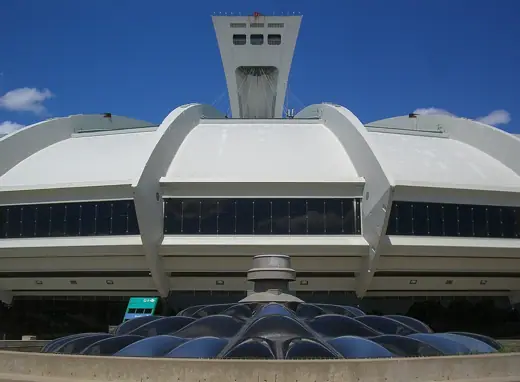
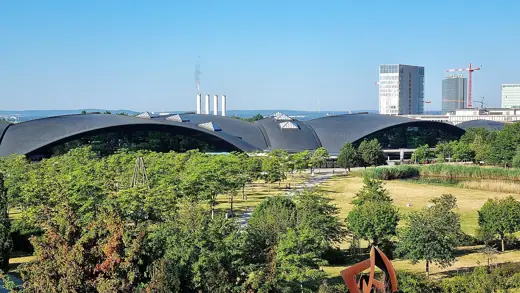
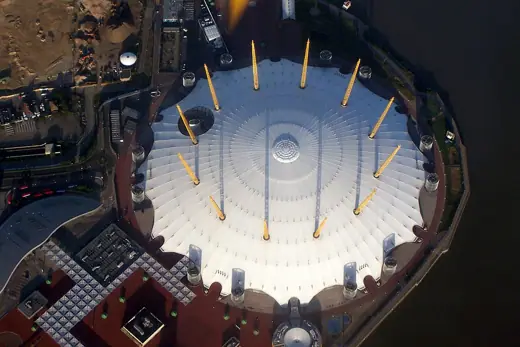
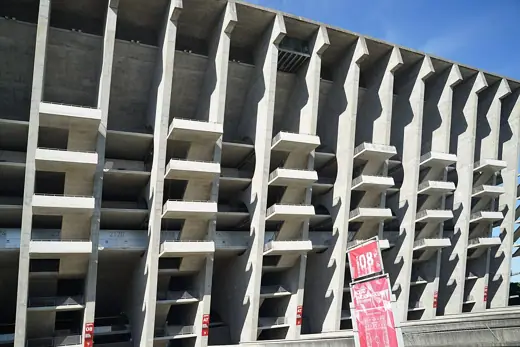
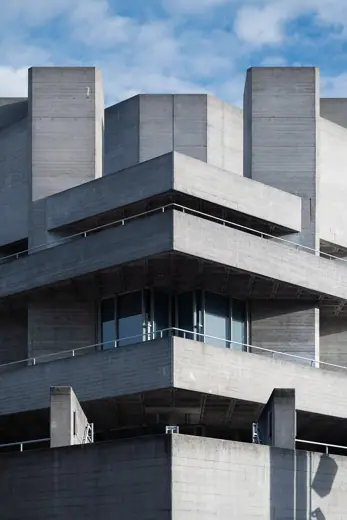
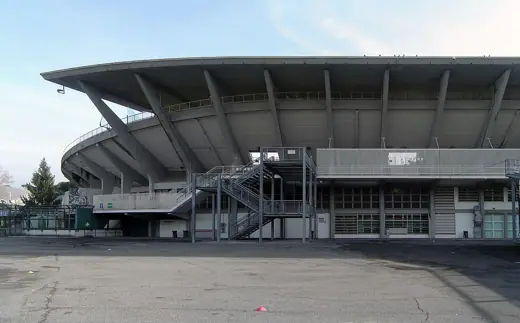
1/7 · Exterior · Olympic Stadium, Montreal, Quebec, CanadaPhoto: Diego Delso · CC BY-SA 4.0 · source2/7 · Exterior · Olympic Stadium @ MontrealPhoto: Guilhem Vellut from Annecy, France · CC BY 2.0 · source3/7 · Exterior · View of the Montreal Olympic Stadium in May 2024Photo: Acediscovery · CC BY 4.0 · source4/7 · Exterior · Olympic Stadium @ MontrealPhoto: Guilhem Vellut from Annecy, France · CC BY 2.0 · source5/7 · InteriorPhoto: Dennis G. Jarvis · CC BY-SA 2.0 · source6/7 · Interior · Cyclists ride inside the stadium during the 2019 Tour la NuitPhoto: Kenneth C. Zirkel · CC BY-SA 4.0 · source7/7 · Model · Maquette du stade olympique représentant une section de la structure entre deux consolesPhoto: Calvin411 · CC BY-SA 4.0 · source
Olympic Stadium is a multi-purpose stadium in Montreal, Canada, located at Olympic Park in the Hochelaga-Maisonneuve district of the city. Built in the mid-1970s as the main venue for the 1976 Summer Olympics, it is nicknamed "The Big O", a reference to both its name and to the doughnut-shape of the permanent component of the stadium's roof. It is also disparagingly referred to as "The Big Owe" in reference to the high cost of its construction and of hosting the 1976 Olympics as a whole.
The stadium is one of the largest by seating capacity in Canada. After the Olympics, artificial turf was installed and it became the home of Montreal's professional baseball and football teams. The Montreal Alouettes of the CFL returned to their previous home of Molson Stadium in 1998 for regular season games, but continued to use Olympic Stadium for playoff and Grey Cup games until 2012. Following the 2004 baseball season, the Expos relocated to Washington, D.C., to become the Washington Nationals. The stadium currently serves as a multi-purpose facility for special events (e.g. concerts, trade shows) with a permanent seating capacity of 56,040. The capacity is expandable with temporary seating.