

Culture & sport · Postmodernism
Cairo Opera House
Key featuresA gift from Japan to Egypt, built 1985-88 to give Cairo a new opera house after the Khedivial Opera.
About the building
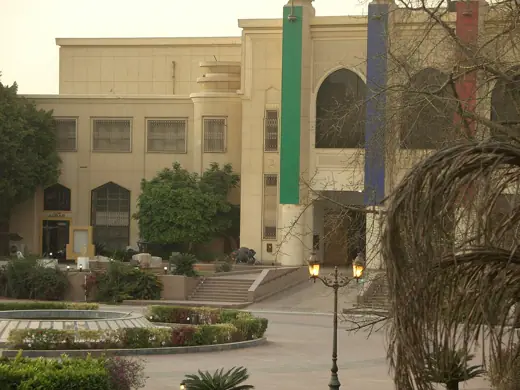
The Cairo Opera House, part of the National Cultural Centre, is the leading venue for the performing arts in Egypt's capital. It occupies the southern end of Gezira Island in the Nile, in the Zamalek district. The complex was paid for by Japan as a gift to Egypt, after President Hosni Mubarak travelled there in April 1983, and Nikken Sekkei designed it. Building began in May 1985, lasted three years, and the opera house opened on 10 October 1988. It holds seven theatres, a library of music, a gallery and a museum. The Main Hall has room for 1,200 people over four levels, with stalls, three tiers and a box for the president. A square open-air stage, designed for its acoustics, seats 600. For students, it shows a full arts campus planned as one complex.
Sources: Cairo Opera House (Wikipedia)
More by Nikken SekkeiAll 11 →
More with monumentalityAll 909 →
Find more with
Monumentality909 buildings →Light from above406 buildings →Public space617 buildings →Culture & sport614 buildings →Each opens every building that shares the idea.
Details
- Architect
- Nikken Sekkei
- Place
- Cairo, Egypt
- Year
- 1988
- Typology
- Culture & sport
- Movement
- Postmodernism
- Region
- Middle East