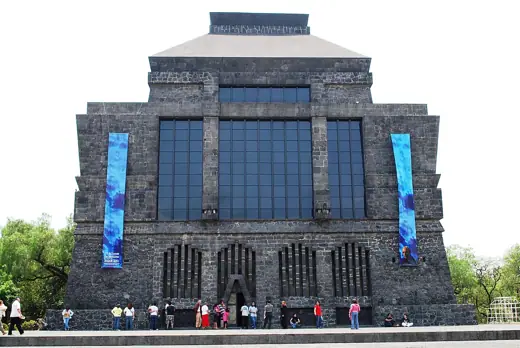
1/5 · Exterior · Facade of the Anahuacalli Museum in Mexico CityPhoto: AlejandroLinaresGarcia · CC BY-SA 4.0 · source2/5 · Exterior · Fachada del AnahuacalliPhoto: Nicole Valenzuela Mejía · CC BY-SA 4.0 · source3/5 · Interior · Door and window inside the lowest level of the Anahuacalli Museum in Mexico CityPhoto: AlejandroLinaresGarcia · CC BY-SA 4.0 · source4/5 · Interior · Altar de arte prehispánico y mosaicos en plafón Planta BajaPhoto: Nicole Valenzuela Mejía · CC BY-SA 4.0 · source5/5 · Detail · Door to roof area of the Anahuacalli MuseumPhoto: AlejandroLinaresGarcia · CC BY-SA 4.0 · source
Key featuresPyramid-like museum of dark volcanic stone with mosaic ceilings, drawing on pre-Hispanic temples.
About the building
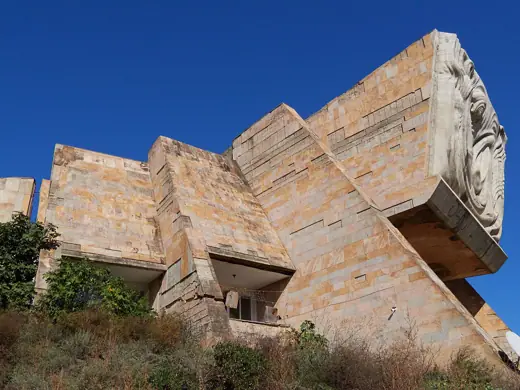
Diego Rivera designed the Anahuacalli, whose Nahuatl name means "house surrounded by water", as a temple of the arts that would keep his vast collection of pre-Hispanic pieces safe while showing the finest of them in the main building. Its forms draw on Mesoamerican structures, chiefly mixing Mayan and Toltec influences, though Rivera called the style a blend of Aztec, Mayan and "Traditional Rivera". It is built of volcanic stone from the Xitle eruption, quarried from the very land the museum stands on. Inside, twenty-three rooms are spread over three levels. On the level meant to represent the Underworld, narrow windows let in only dim daylight. Building work ended in 1963, and the museum opened on 18 September 1964.
The Diego Rivera Anahuacalli Museum is a museum and arts center in Mexico City, located in the San Pablo de Tepetlapa neighborhood of Coyoacán, 10 minutes by car from the Frida Kahlo Museum, as well as from the tourist neighborhood of this district.
The Anahuacalli (from the Nahuatl word, whose meaning is "house surrounded by water"), is a temple of the arts designed by the Mexican muralist Diego Rivera. This museum stands out for its extensive collection of pre-Columbian art, as well as for its Ecological Space that protects endemic flora and fauna. Rivera designed its architecture in order to safeguard his vast collection of pre-Hispanic pieces, while exhibiting the most beautiful works of this set in the museum's main building. Accordingly, a selection of 2,000 artworks, especially well executed and preserved, has been on display since the opening of the Anahuacalli to the public on September 18, 1964.