

Museum · Regionalism
Nubia Museum
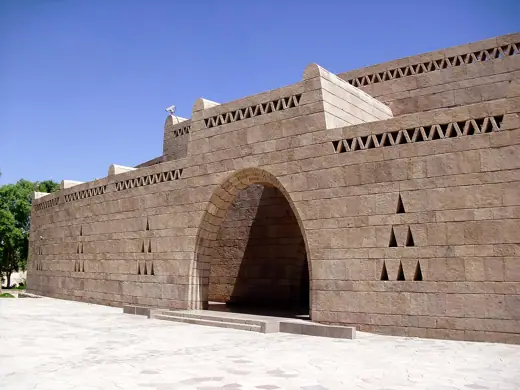
Key featuresSandstone and granite volumes stepped into a hillside, with an outdoor garden of Nubian houses and water.
About the building
The Nubia Museum in Aswan, formally the International Museum of Nubia, is an archaeology museum devoted to Nubian culture and heritage. Designed by the Egyptian architect Mahmoud El-Hakim, it was built following the UNESCO campaign to save the monuments of Nubia and opened on 23 November 1997. It stands on a rocky hill, built in local stone, and its layout and look draw on the region's ancient temples, fortresses and houses. Of its 50,000 square metres, 7,000 are building; the rest is gardens and public space, among them a botanical garden of Egyptian plants. Three floors serve display and housing, plus a library and information centre. Because it sits on a steep cliff, the museum can hold a full-scale design of the Nile, from Ethiopia and Sudan down to Egypt. In 2001 it won the Aga Khan Award for Architecture.
Sources: Nubian Museum (Wikipedia)
More with landscapeAll 736 →
Find more with
Landscape736 buildings →Stone524 buildings →Earth & local material83 buildings →Museum735 buildings →Each opens every building that shares the idea.
Details
- Architect
- Mahmoud El-Hakim
- Place
- Aswan, Egypt
- Year
- 1997
- Typology
- Museum
- Movement
- Regionalism
- Region
- Middle East