

House · Modernism
2 Willow Road
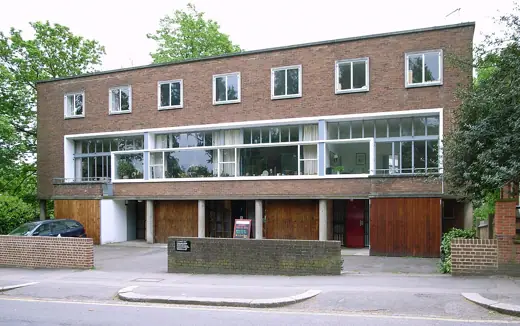
Key featuresA concrete-framed brick terrace with a spiral stair core and a long first-floor window band.
About the building
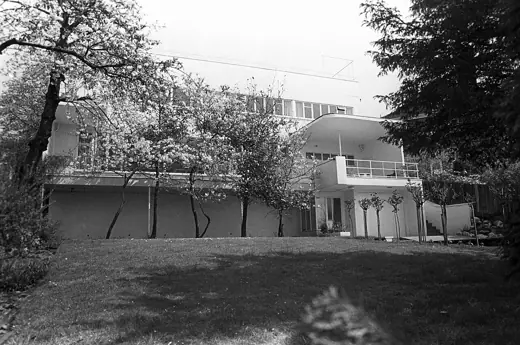
Ernő Goldfinger designed 2 Willow Road as his own family home, the largest of three terraced houses in Hampstead, London, completed in the summer of 1939 in concrete faced with red brick. A revised scheme grouped the three into a single block while keeping the concrete frame that was central to his Modernist thinking. Part of the frame sits outside, freeing the interior to stay open and uncluttered, perhaps after Adolf Loos's Raumplan ideas. The engineer Ove Arup designed the spiral stair at its core. Goldfinger designed much of the furniture, and the rooms hold 20th-century works by Max Ernst, Henry Moore, Marcel Duchamp, Bridget Riley, Eduardo Paolozzi and Prunella Clough. The National Trust has managed the house since 1995 and opens it to visitors; it was among the first Modernist buildings the Trust acquired, which caused some controversy.
Sources: 2 Willow Road (Wikipedia)
More by Ernő GoldfingerAll 4 →
More with brickAll 332 →
Find more with
Brick332 buildings →Free plan117 buildings →Detail553 buildings →House332 buildings →Each opens every building that shares the idea.
Details
- Architect
- Ernő Goldfinger
- Year
- 1939
- Typology
- House
- Movement
- Modernism
- Region
- Europe