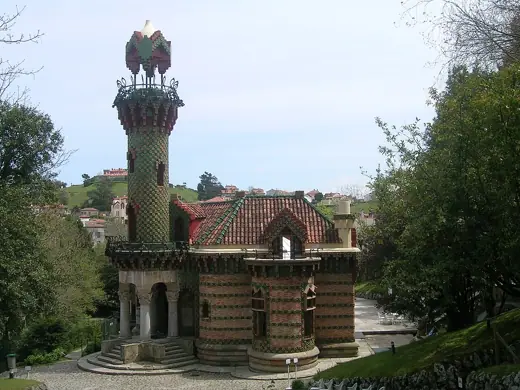
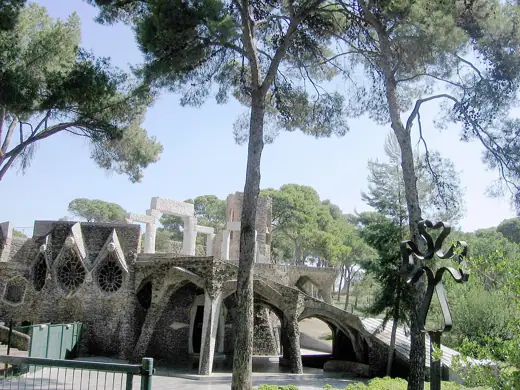
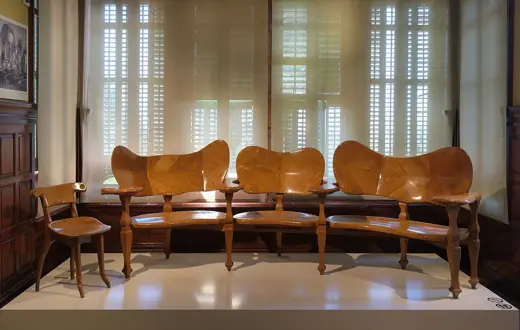
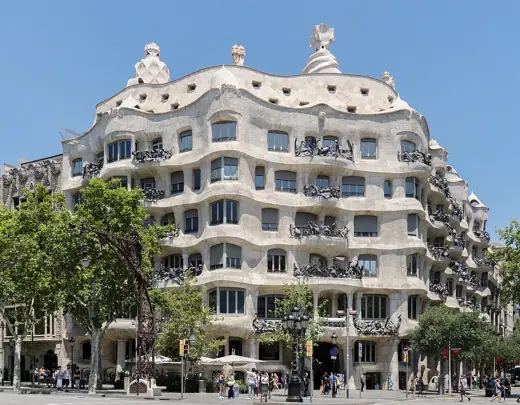
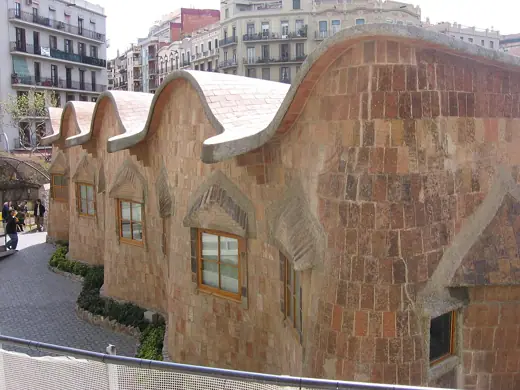
1/7 · Exterior · Llamado El Capricho de GaudíPhoto: Cotarelo75 · CC BY-SA 3.0 · source2/7 · Exterior · Vista exterior de "el Capricho" de Gaudí, en la población de ComillasPhoto: Respinya · CC BY-SA 4.0 · source3/7 · Exterior · Villa El CaprichoPhoto: Marques de Benamaurel · CC BY-SA 4.0 · source4/7 · Exterior · Balcon Gaudi CaprichoPhoto: Artistosteles · CC BY-SA 4.0 · source5/7 · Interior · Estancia interior de "el Capricho" de Gaudí, en la población de ComillasPhoto: Respinya · CC BY-SA 4.0 · source6/7 · Interior · Estancia interior de "el Capricho" de Gaudí, en la población de ComillasPhoto: Respinya · CC BY-SA 4.0 · source7/7 · ModelPhoto: Jordiferrer · CC BY-SA 3.0 · source
Key featuresBrick villa banded with green sunflower tiles, entered under a slender minaret-like tower on stone columns.
About the building
El Capricho, a villa in Comillas, Cantabria, was Antoni Gaudí's design for a summer house for the wealthy Máximo Díaz de Quijano. Built from 1883 to 1885, it was finished a year after the client's death. Gaudí designed few buildings outside Catalonia; this house belongs to his early orientalist period. The tower has been likened to a minaret: four classical columns at the base carry its weight, ceramic tiles alternate yellow sunflowers with green leaves, and the top ends in an arabesque finish. Each of the three floors shows its own material outside, from large stone bricks in the basement to smaller red bricks on the main floor and a sloping tiled roof above. Large windows under pointed Gothic arches bring in daylight. Neglected after the Spanish Civil War, it became a restaurant in 1988 and a museum in 2009.
Portrait: Pau Audouard Deglaire · Public domain · source
About El Capricho
El Capricho is a villa in Comillas (Cantabria), Spain, designed by Antoni Gaudí. It was built in 1883–1885 for the summer use of a wealthy client, Máximo Díaz de Quijano, who died a year before the house was completed.
El Capricho is one of the many marvels created by the esteemed architect Antoni Gaudi. In this project, Gaudi displayed his extensive knowledge of problem-solving and architectural styles to make a combined testimony of history and his own unique way.
Gaudí, who designed only a small number of buildings outside Catalonia, was involved with other projects at Comillas. He was the assistant of Joan Martorell on another summer residence, the Palacio de Sobrellano.
El Capricho belongs to the architect's orientalist period, during the beginnings of Gaudi's artwork. El Capricho allows to see all the foundations on which Modernisme is based, anticipating Europe's avant-garde Art Nouveau. The tower has been compared to a minaret. After the death of Máximo Díaz de Quijano, this building was used such as a summer house for the most economically and politically powerful people.