


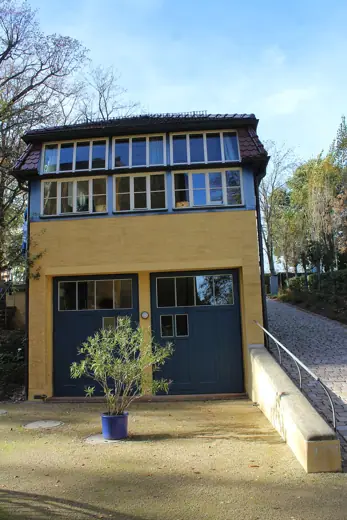


House · Art Nouveau
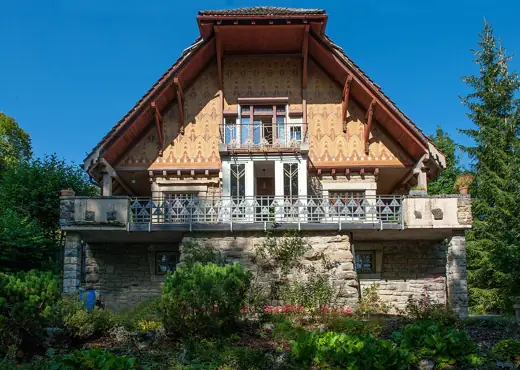
Villa Esche

Key featuresA calm villa whose rooms, furniture and fittings van de Velde designed as one flowing whole.
About the building
The Belgian Henry van de Velde designed and built Villa Esche in Chemnitz-Helbersdorf in 1902–1903 and extended it in 1911. Made for the family of Herbert Esche, a textile entrepreneur, it is thought to be van de Velde's first German commission and so the start of modern architecture in Chemnitz. In the Art Nouveau sense it is a Gesamtkunstwerk, or total work of art, including furniture, textiles, everyday objects and even clothing. Van de Velde's wife, Maria Séthe, probably designed the small park. From 1945 it served in turn as the Soviet military commander's seat, a residence, a base for the Ministry for State Security and an educational institution, then stood empty after 1989. Restored in 1998–2001 by Werner Wendisch, partly with Karl-Heinz Barth, the villa now holds a Henry van de Velde Museum with parts of the original furnishings.
Sources: Villa Esche · Henry van de Velde (Wikipedia)
More by Henry van de VeldeAll 6 →
More with detailAll 553 →
Find more with
Detail553 buildings →Timber229 buildings →Human comfort45 buildings →House332 buildings →Each opens every building that shares the idea.
Details
- Place
- Chemnitz, Germany
- Year
- 1903
- Typology
- House
- Movement
- Art Nouveau
- Region
- Europe
Go deeper





See all 8 links


More · HouseAll 332 →
Portrait: Hugo Erfurth · Public domain · source