Henry van de Velde (1863–1957) was a Belgian painter, architect, interior designer and theorist who, with Victor Horta and Paul Hankar, is counted among the founders of Art Nouveau in Belgium. Born in Antwerp, he trained as a painter. In 1892 he gave up painting for design, and he was among the first designers to use abstract curving lines rather than forms copied from nature. He spent the most important part of his career in Germany, where in 1907 he co-founded the German Werkbund, and in Weimar he headed the school of arts and crafts until the First World War, proposing Walter Gropius as his successor.
Read moreShow less
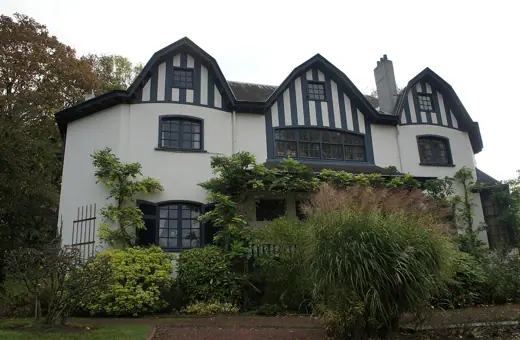
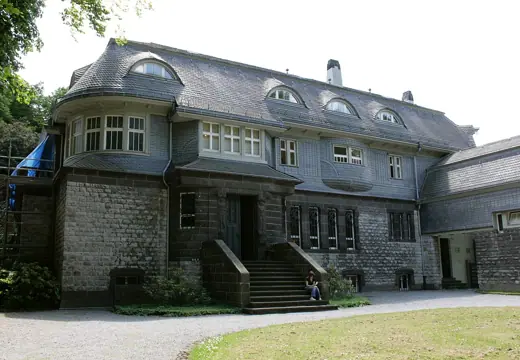
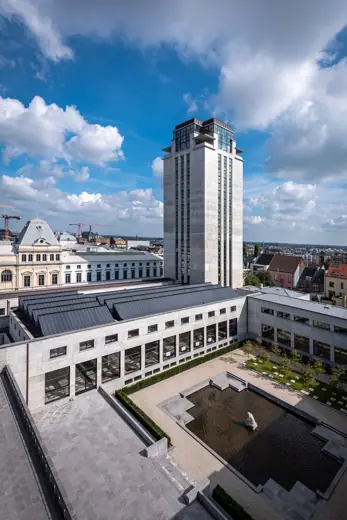
His first building was his own house, Villa Bloemenwerf in Uccle near Brussels (1895), inspired by William Morris's Red House and designed down to its furniture. Villa Esche in Chemnitz (1903), was his first commission in Germany. Hohenhof in Hagen (1908), the home of the patron Karl Ernst Osthaus, was conceived as a total work of art, from shell to furnishings and garden. Back in Belgium he designed the Boekentoren in Ghent (1942), the tower of the university library, which holds three million books.