

Museum · Postmodernism
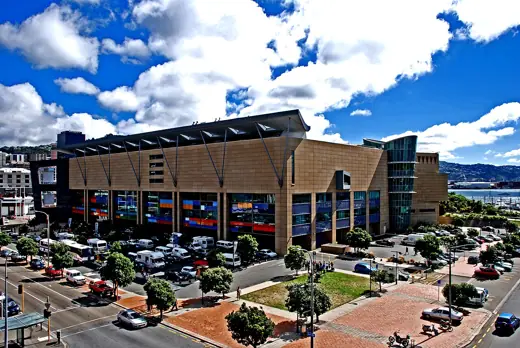
Te Papa Tongarewa
Key featuresPlan split along an axis between Maori and Pakeha halves, with the building on base isolators.
About the building
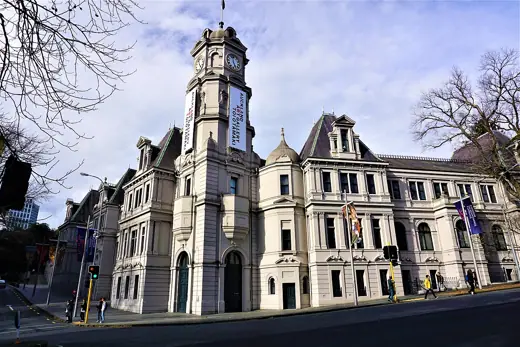
Wellington's Te Papa, whose name means 'the treasure box' in Māori, serves as New Zealand's national museum. It opened in 1998, following the merger of the National Art Gallery and the National Museum of New Zealand. Pete Bossley of Jasmax Architects was the designer and Fletcher Construction the builder, and the design followed bicultural principles drawn from the Treaty of Waitangi. The building sits on reclaimed Cable Street land. To firm up the soft fill, weights as heavy as 30 tonnes were dropped from heights of up to 30 metres in a crossing grid, compacting it 16 metres down. Base isolation, developed in New Zealand, guards against earthquakes; some isolators can be seen underground in 'Quake Braker'. The 36,000 m² building cost NZ$300 million by opening, and in 2000 Architecture NZ readers voted it Building of the Decade.
Sources: Te Papa (Wikipedia)
More by JasmaxAll 2 →
More with axisAll 319 →
Find more with
Axis319 buildings →Structure as expression668 buildings →Landscape736 buildings →Museum735 buildings →Each opens every building that shares the idea.
Details
- Architect
- Jasmax
- Place
- Wellington, New Zealand
- Year
- 1998
- Typology
- Museum
- Movement
- Postmodernism
- Region
- Oceania