




Culture & sport · Historic precedent
Stadio Renato Dall'Ara
Key featuresOpened as Stadio Littoriale; stands built into the architecture, later a 1990 steel frame and cantilevered roof.
About the building
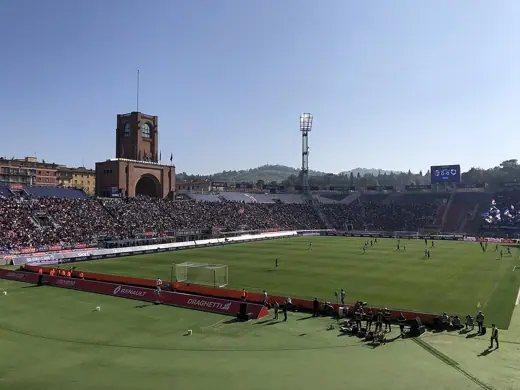
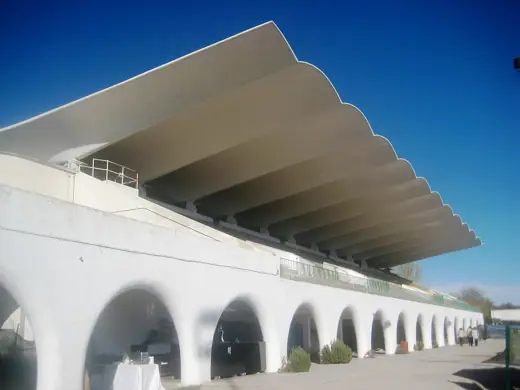
Giulio Ulisse Arata designed this multi-purpose stadium in Bologna, opened in 1927 as the Stadio Littoriale and now mainly a football ground, home to Bologna FC. It was among the first stadiums to make the stands part of the architecture, an idea that later served as a model for stadiums around the world. Its large arch once held an equestrian statue of Benito Mussolini, destroyed when the city was liberated in 1943. The ground hosted games at the 1934 and 1990 FIFA World Cups, and the second required enlargement and modernisation. For that, an exposed steel frame of 120 columns was lined up with the old pilasters, carrying the extended terrace and giving access by stairwells around the perimeter. It seats around 36,000, and up to 55,000 for concerts.
Sources: Stadio Renato Dall'Ara (Wikipedia)
More with structure as expressionAll 668 →
Find more with
Structure as expression668 buildings →Cantilever180 buildings →Monumentality909 buildings →Culture & sport614 buildings →Each opens every building that shares the idea.
Details
- Architect
- Giulio Ulisse Arata
- Place
- Bologna, Italy
- Year
- 1927
- Typology
- Culture & sport
- Movement
- Historic precedent
- Region
- Europe

Go deeper





More · Culture & sportAll 614 →
Portrait: Unknown author · Public domain · source