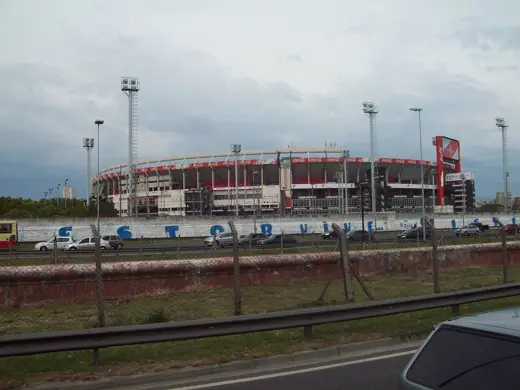
1/3 · Exterior · Estadio de River Plate, visto desde la Avenida Leopoldo LugonesPhoto: GelpgimLa22 (Sergio Panei Pitrau) · CC BY 3.0 · source2/3 · Interior · mas monumental stadiumPhoto: Dibumartinez23 · CC0 · source3/3 · Interior · Photo from Monumental de Nuñez Stadium in Buenos Aires, ArgentinaPhoto: Juze · CC BY-SA 3.0 · source
The Estadio Monumental (Spanish pronunciation: [esˈtaðjo mˌonumentˈal]; lit. 'Monumental Stadium', named after its monumental structure), also known as Estadio River Plate, is an association football stadium in Buenos Aires, Argentina. Located in the Belgrano neighbourhood, it is the home of River Plate.
It was opened on 26 May 1938 and was previously (1986–2022) named after former club president Antonio Vespucio Liberti (1900–1978). It is the largest stadium in both Argentina and all of South America with a capacity of 85,018 and is also home of the Argentina national football team. It was the main venue in the 1951 Pan American Games. It hosted the 1978 FIFA World Cup final between Argentina and the Netherlands. It has also hosted four finals of the Copa América, most recently in 2011, as well as many finals of the Copa Libertadores.