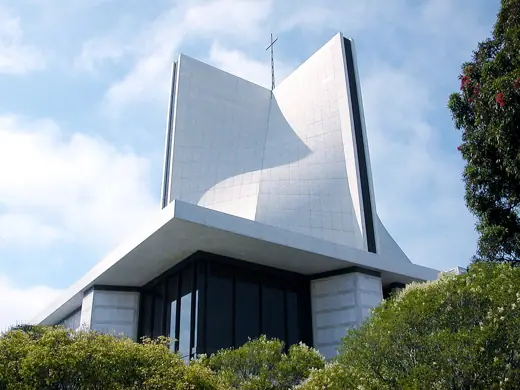
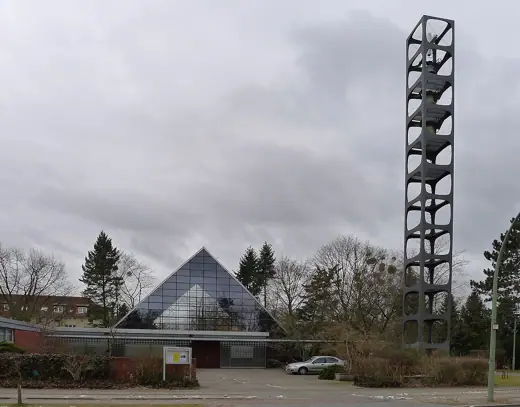
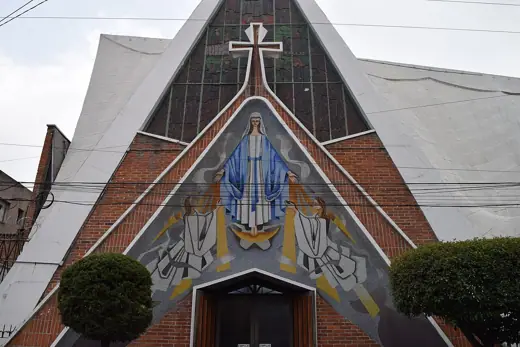
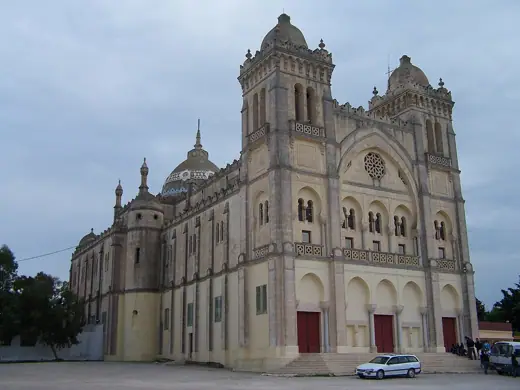
1/6 · ExteriorPhoto: Kakidai · CC BY-SA 3.0 · source2/6 · ExteriorPhoto: Kakidai · CC BY-SA 4.0 · source3/6 · Exterior · The Lourdes grotto of StPhoto: Fred Cherrygarden · CC BY-SA 4.0 · source4/6 · ExteriorPhoto: Daderot · CC0 · source5/6 · Interior · Altar of the Cathedral of StPhoto: Zairon · CC BY-SA 4.0 · source6/6 · Interior · Ceiling Construction of the Cathedral of StPhoto: Zairon · CC BY-SA 4.0 · source
Portrait: Hans van Dijk for Anefo · CC BY-SA 3.0 nl · source
About St. Mary's Cathedral
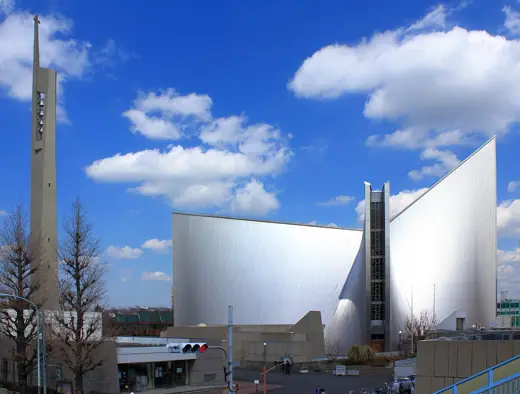
St. Mary's Cathedral (in Japanese: 東京カテドラル聖マリア大聖堂, romanized: Tōkyō katedoraru sei Maria daiseidō) is the seat of the Roman Catholic Archdiocese of Tokyo. It is located in the Sekiguchi neighborhood of Bunkyo, Tokyo, Japan.
The layout of the building is in the form of a cross, from which eight hyperbolic parabolas open upwards to form a cross of light, which continues vertically along the length of the four facades. Through the use of parabolas, the rhomboidal ground floor is turned into a cross as the building rises. This Tange design inspired the later similar design of the landmark cathedral in San Francisco, also referred to as St. Mary's Cathedral.
To this rhomboid volume other secondary constructions are added, including the baptistry and the baptismal font. The rectangular shapes contrast with the symbolic character of the cathedral. The bell tower is 61.6 m (202 ft) high, standing a short distance away from the main building. The exterior cladding is made of stainless steel.
In 2004 a large organ built by Italian firm Mascioni was installed.
Some critics have evaluated the cathedral as one of Tange's lesser works, dealing in cliché and failing to establish a civic space of the sort that Tange aspired to. Architectural historian David Stewart went as far as to state "the less said about Tokyo Cathedral, the better."