




Museum · Historic precedent
Pergamon Museum
Key featuresA three-winged neoclassical block built around reconstructed ancient monuments like the Pergamon Altar.
About the building
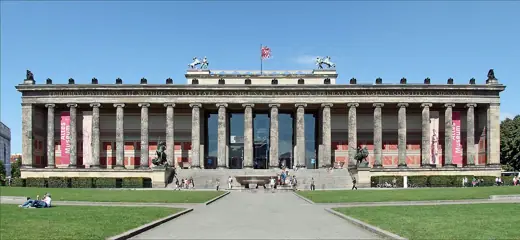
The Pergamon Museum is a listed building on Museum Island in central Berlin. The idea came from Wilhelm von Bode, head of the Kaiser-Friedrich-Museum, who wanted a new museum close by for ancient architecture, German post-antique art, and Islamic and Middle Eastern art. Alfred Messel started designing the big three-winged building in 1906; when he died in 1909 his friend Ludwig Hoffmann took over. Ordered by Emperor Wilhelm II and built in a Stripped Classicism style, it rose from 1910 through the First World War and the inflation of the 1920s, opening in 1930. Hoffmann toned down the exterior, raising the eaves, flattening the pediment and adding a frieze of metopes and triglyphs. Its chief exhibits are the Pergamon Altar, with a frieze 113 metres long, and the Roman Gate of Miletus.
Sources: Pergamon Museum · Alfred Messel (Wikipedia)
More with monumentalityAll 909 →
Find more with
Monumentality909 buildings →Courtyard325 buildings →Axis319 buildings →Museum735 buildings →Each opens every building that shares the idea.
Details
- Architect
- Alfred Messel and Ludwig Hoffmann
- Place
- Berlin, Germany
- Year
- 1930
- Typology
- Museum
- Movement
- Historic precedent
- Region
- Europe

Go deeper





More · MuseumAll 735 →
Portrait: Photographer not credited · Public domain · source