

Civic · Historic precedent
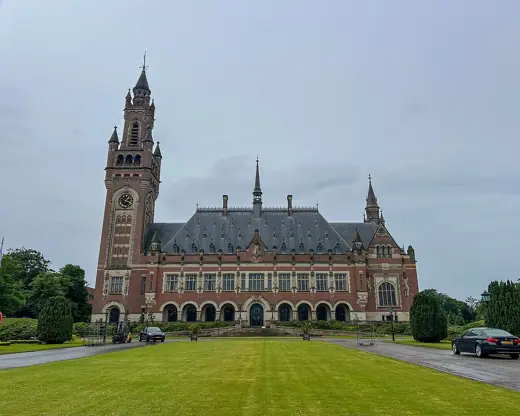
Peace Palace
Key featuresNeo-Renaissance courthouse chosen from 216 entries in a 1905 competition; funded by Andrew Carnegie.
About the building
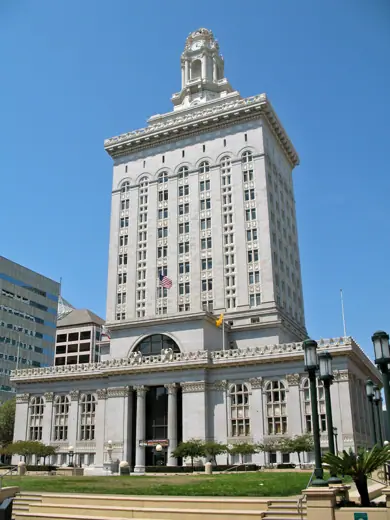
The Peace Palace in The Hague, an international courthouse, houses the UN's principal court, the International Court of Justice, as well as the Permanent Court of Arbitration (PCA), which the Hague Convention of 1899 created to end war and for which the palace was first built. Andrew Dickson White obtained US$1.5 million from Andrew Carnegie, the steel magnate, to pay for the building and a library of international law. A competition run by a new Foundation drew 216 entries and picked the Neo-Renaissance design by French architect Louis M. Cordonnier. Cordonnier and his Dutch associate, J.A.G. van der Steur, adjusted the design to stay within budget. Two large front towers and two small rear ones were planned; one of each was built. The palace opened on 28 August 1913 and received the European Heritage Label on 8 April 2014.
Sources: Peace Palace (Wikipedia)
More with monumentalityAll 909 →
Find more with
Monumentality909 buildings →Axis319 buildings →Detail553 buildings →Civic375 buildings →Each opens every building that shares the idea.
Details
- Architect
- Louis M. Cordonnier
- Place
- The Hague, Netherlands
- Year
- 1913
- Typology
- Civic
- Movement
- Historic precedent
- Region
- Europe