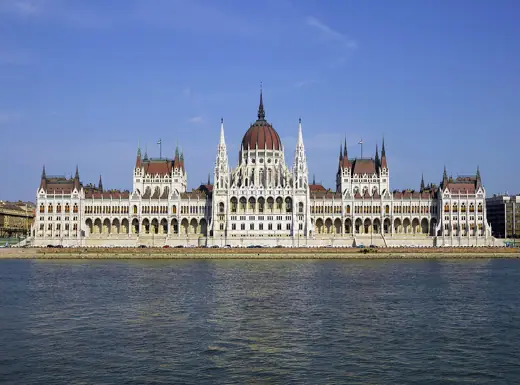
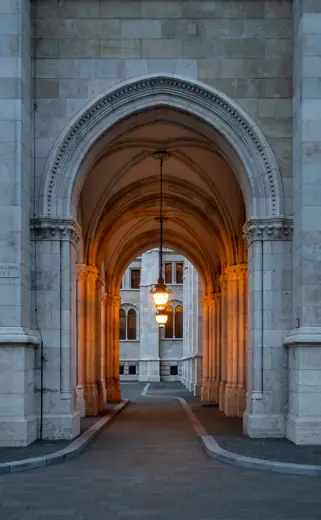
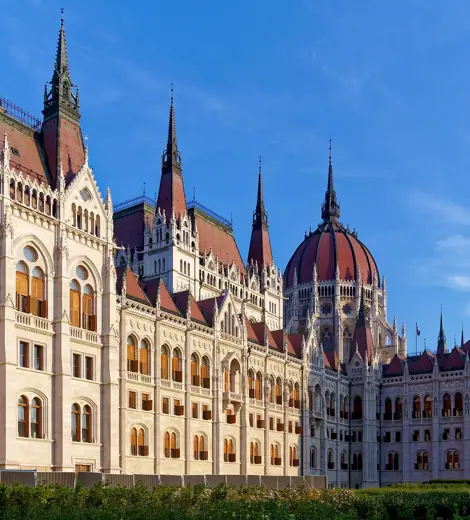
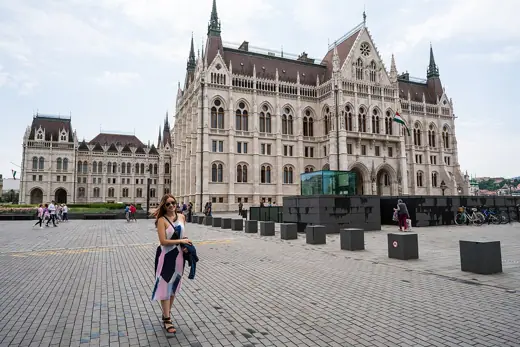
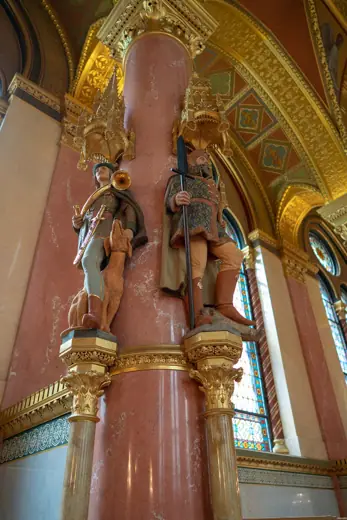
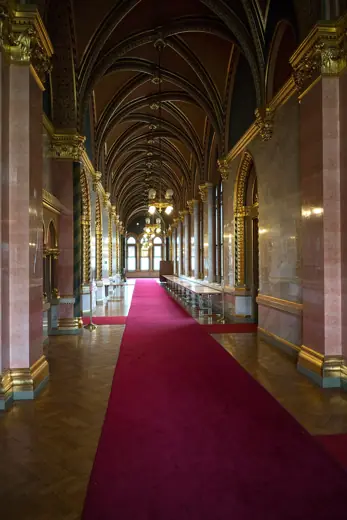
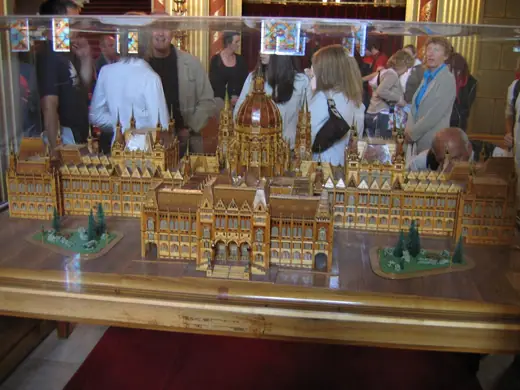
1/7 · Exterior · Hungarian Parliament Building , Budapest , Hungary , 2015Photo: Source: User:Godot13 Derivative: User:MathKnight · CC BY-SA 4.0 · source2/7 · Exterior · Arch of the Hungarian Parliament Building (Országház), at twilightPhoto: Jules Verne Times Two · CC BY-SA 4.0 · source3/7 · ExteriorPhoto: Jakub Hałun · CC BY-SA 4.0 · source4/7 · Exterior · Deya at the Hungarian Parliament BuildingPhoto: Nan Palmero from San Antonio, TX, USA · CC BY 2.0 · source5/7 · InteriorPhoto: Nan Palmero from San Antonio, TX, USA · CC BY 2.0 · source6/7 · InteriorPhoto: Nan Palmero from San Antonio, TX, USA · CC BY 2.0 · source7/7 · Model · Model of the Hungarian Parliament Building (Országház), located within the real buildingPhoto: Andrew Bossi · CC BY-SA 2.5 · source
Civic · Historic precedent
Hungarian Parliament Building
Imre Steindl · Budapest, HU · 1904
Key featuresSymmetrical Gothic Revival riverfront range around a central domed hall.
The Hungarian Parliament Building (Hungarian: Országház [ˈorsaːkhaːz], lit. 'House of the Country'), also known as the Parliament of Budapest after its location, is the seat of the National Assembly of Hungary, a notable landmark of Hungary, and a popular tourist destination in Budapest. It is situated on Kossuth Square in the Pest side of the city, on the eastern bank of the Danube. It was designed by Hungarian architect Imre Steindl in neo-Gothic style and opened in 1902. It has been the largest building in Hungary since its completion. The architectural style of the Hungarian parliament building was influenced by the gothic Vienna City Hall, and the renaissance elements like the cupola was influenced by the Maria vom Siege church in Vienna.




.jpg)
.jpg)
.jpg)
_-_Recreation_from_Matchboxes.JPG)