
Memorial · Regionalism
Nanjing Massacre Memorial Hall
Key featuresPebble-strewn ground with withered trees and stone walls forms a barren field of mourning.
About the building
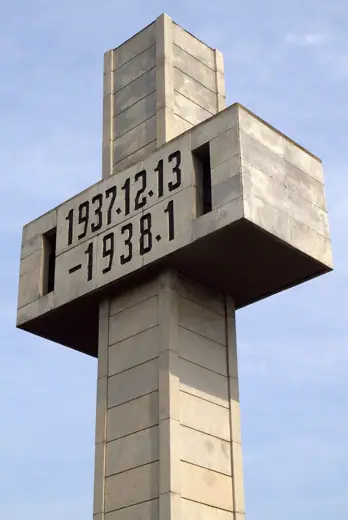
This museum honours the people killed in the Nanjing Massacre, carried out by Japan's Imperial Army in and around the city, then China's capital, after it fell on 13 December 1937. It stands at Jiangdongmen, in the southwest of downtown Nanjing, near a mass burial site known as the "pit of ten thousand people". The Nanjing Municipal Government built it in 1985 to commemorate the massacre's three hundred thousand victims. The design is credited to Qi Kang, with a first phase from 1983 to 1985 and a second in 1995, when the memorial was enlarged and renovated. Records, objects, architecture, sculpture and video show what happened. Its three main parts are outdoor exhibits, a shelter over victims' skeletal remains, and a tomb-like exhibition hall, half underground, with over 1,000 items. The site covers about 28,000 square metres.
Sources: Memorial Hall of the Victims in Nanjing Massacre by Japanese Invaders · Qi Kang (architect) (Wikipedia)
More with landscapeAll 736 →

Find more with
Landscape736 buildings →Stone524 buildings →Monumentality909 buildings →Memorial119 buildings →Each opens every building that shares the idea.
Details
- Architect
- Qi Kang
- Place
- Nanjing, China
- Year
- 1985
- Typology
- Memorial
- Movement
- Regionalism
- Region
- East Asia