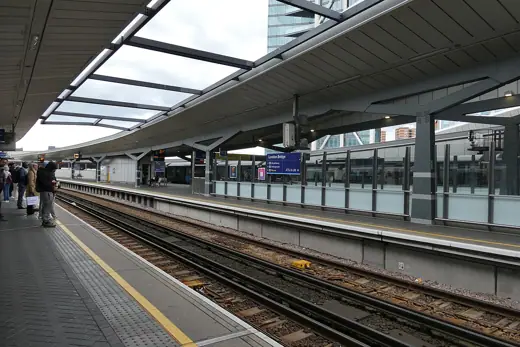
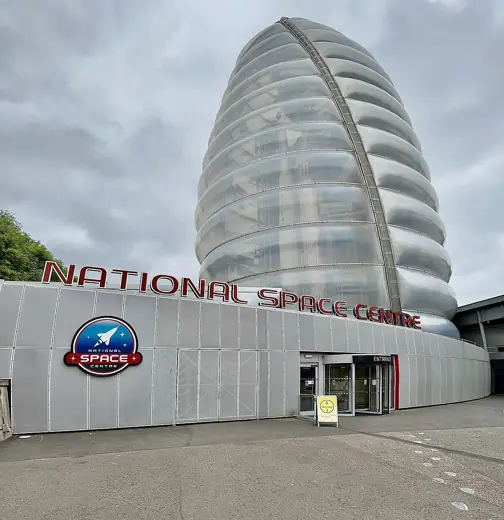
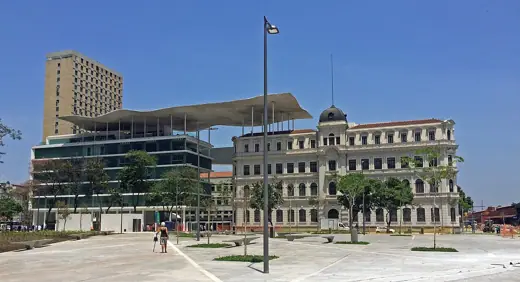
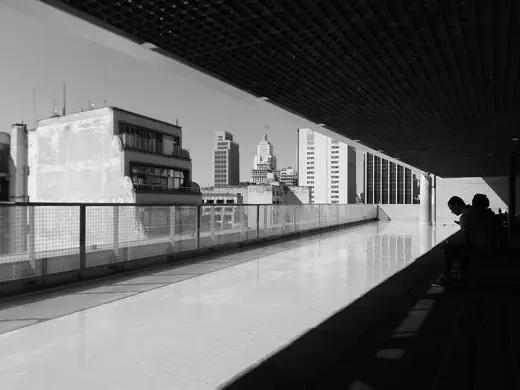
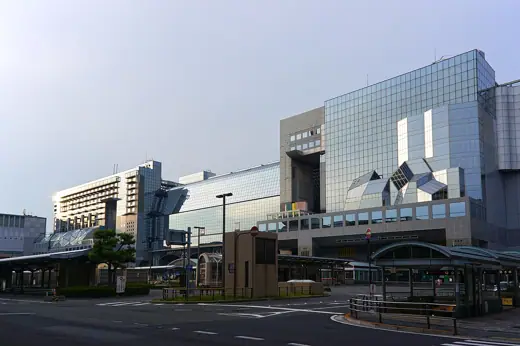
1/9 · Exterior · London Bridge platforms 7 & 8Photo: DS Pugh · CC BY-SA 2.0 · source2/9 · Exterior · London Bridge Station entrance from A200 roadPhoto: DaHuzyBru · CC BY-SA 4.0 · source3/9 · Interior · London Bridge ConcoursePhoto: Tim Sheerman-Chase · CC BY 2.0 · source4/9 · Interior · London Bridge railway station with a glass lift shaft central in the imagePhoto: Oleg Yunakov · CC BY-SA 4.0 · source5/9 · Interior · Inside the concourse of London Bridge stationPhoto: Aubrey Morandarte from Guildford or Coventry, England · CC BY-SA 2.0 · source6/9 · Interior · London Bridge station: stairs down into the new concoursePhoto: Christopher Hilton · CC BY-SA 2.0 · source7/9 · Section · London Bridge station, Eastern section, 2006Photo: Ben Brooksbank · CC BY-SA 2.0 · source8/9 · Model · A paper made mockup of how London Bridge will look when the Thameslink Programme is completePhoto: TheJRB · CC BY-SA 2.0 · sourcePhotos unavailable9/9Loz Pycock · CC BY-SA 2.0 · source
Key featuresRebuilt station with a huge street-level concourse under the tracks and long curved canopies over the platforms.
About the building
Opened in 1836, the main line station at London Bridge is the oldest in London's fare zone 1 and among the oldest in the world. Between 2009 and 2017 Grimshaw Architects thoroughly redeveloped it: all platforms were renewed, two large street-level entrances were added, and the concourses and shops were reworked. A 1970s footbridge for changing platforms gave way to an interchange concourse under the tracks, reached by lifts, stairs and escalators. A big street-level concourse with ticket office, shops and waiting areas links the platforms, opening onto St Thomas Street and Tooley Street. Through platforms rose from six to nine, all fit for 12-car trains. Prince William opened it officially on 9 May 2018; the project was valued at about £1 billion. It won a World Architecture Festival transport award and made the Stirling Prize shortlist in July 2019.
London Bridge is a central London railway terminus and connected London Underground station in Southwark, south-east London. It occupies a large area on three levels immediately south-east of London Bridge, from which it takes its name. The main line station is the oldest railway station in London fare zone 1 and one of the oldest in the world, having opened in 1836. It is one of two main line termini in London to the south of the River Thames (the other being Waterloo) and is the fifth-busiest station in London, handling over 50 million passengers a year.
The station was originally opened by the London and Greenwich Railway as a local service. It subsequently served the London and Croydon Railway, the London and Brighton Railway and the South Eastern Railway, thus becoming an important London terminus. It was rebuilt in 1849 and again in 1864 to provide more services and increase capacity. Local services from London Bridge began to be electrified in the beginning of the 20th century, and had spread to national routes by the 1930s. The station was extensively rebuilt by British Rail during the 1970s, along with a comprehensive re-signalling scheme and track alignment.