




Museum · Regionalism
Lahore Museum
Key featuresIndo-Saracenic red-brick museum housing Gandharan and Indus Valley collections, plus Sadequain's ceiling mural.
About the building
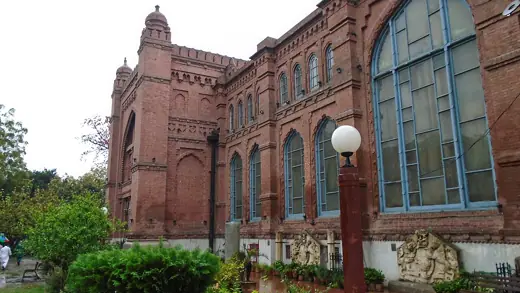
Lahore Museum, on The Mall in Lahore, is Pakistan's largest museum and one of its most visited. Bhai Ram Singh worked with John Lockwood Kipling on the design of its present building, and Ganga Ram oversaw construction. It was raised to commemorate the Golden Jubilee of Queen Victoria in 1887 and paid for by a public fund collected for that occasion. Prince Albert Victor laid the foundation stone on 3 February 1890, and the collection moved into the building in 1894, during the British colonial period. The architecture follows the Indo-Saracenic style, and the collection is rich in Buddhist art of the Gandhara and Indo-Greek kingdoms. The entrance hall ceiling carries The Evolution of Mankind, a mural of 48 panels. The museum, with the Zamzama Gun before it, is where the opening scene of Rudyard Kipling's novel Kim takes place.
Sources: Lahore Museum (Wikipedia)
More with brickAll 332 →
Find more with
Brick332 buildings →Detail553 buildings →Courtyard325 buildings →Museum735 buildings →Each opens every building that shares the idea.
Details
- Architect
- Bhai Ram Singh and John Lockwood Kipling
- Place
- Lahore, Pakistan
- Year
- 1894
- Typology
- Museum
- Movement
- Regionalism
- Region
- South Asia

Go deeper





See all 8 links


More · MuseumAll 735 →
Portrait: Rudolf Swoboda · Public domain · source