




Palace · Historic precedent
Hearst Castle
Key featuresSpanish Revival main house with twin bell towers above terraces, pools and guest cottages.
About the building
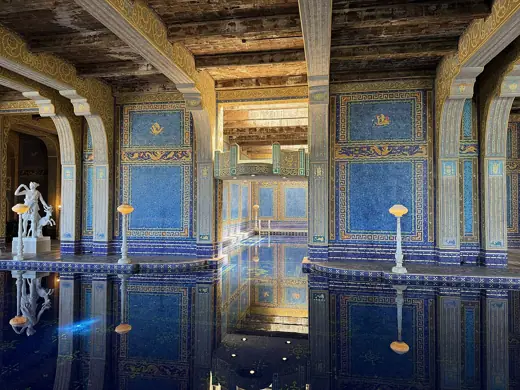
Hearst Castle, formally La Cuesta Encantada ('The Enchanted Hill'), is a historic estate at San Simeon on California's Central Coast. The publisher William Randolph Hearst conceived it with his architect Julia Morgan, who worked closely with him for more than twenty years. Building went on almost without pause from 1920 to 1939 and resumed after World War II until Hearst left for good in 1947. Concrete was the main structural material. Hearst bought architectural pieces from Western Europe, above all Spain, including ceilings, fireplaces and whole monasteries, and much was built into the castle. He asked Morgan to base the Casa Grande towers on a church he admired in Ronda. It has 42 bedrooms, 61 bathrooms, indoor and outdoor pools, a cinema and an airfield. Constant design changes and money troubles in the 1930s left it unfinished.
Sources: Hearst Castle (Wikipedia)
More by Julia MorganAll 3 →
More with landscapeAll 736 →
Find more with
Landscape736 buildings →Water306 buildings →Monumentality909 buildings →Palace44 buildings →Each opens every building that shares the idea.
Details
- Architect
- Julia Morgan
- Place
- San Simeon, United States
- Year
- 1947
- Typology
- Palace
- Movement
- Historic precedent
- Region
- Americas

Go deeper




See all 9 links


More · PalaceAll 44 →

Portrait: Boyé Studio, San Francisco · Public domain · source