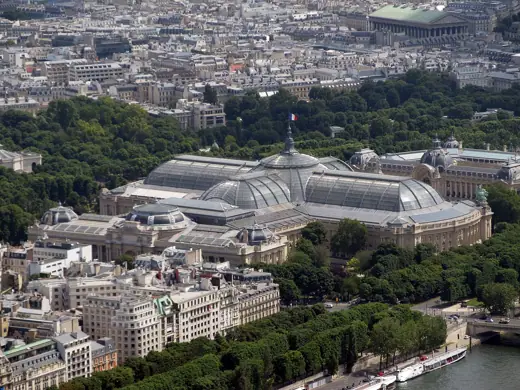
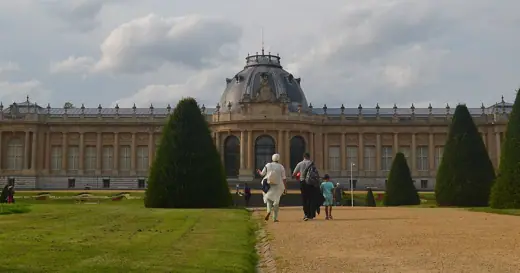
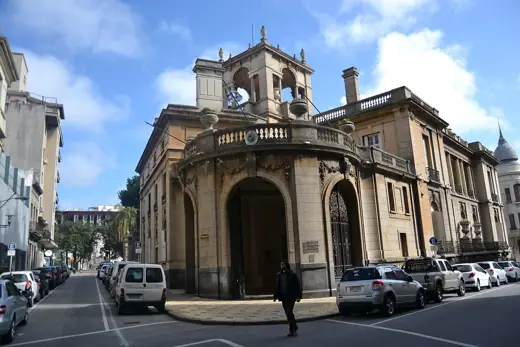
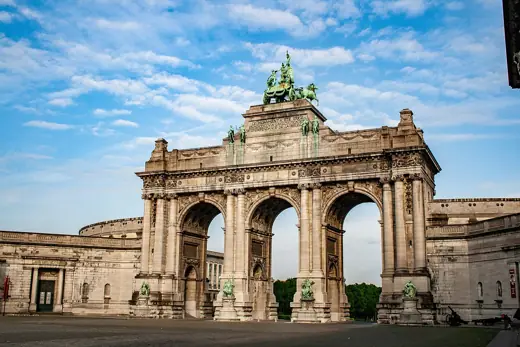
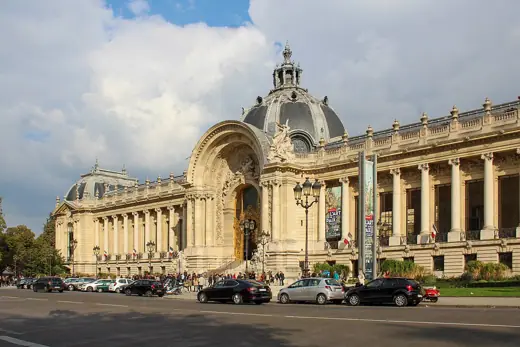
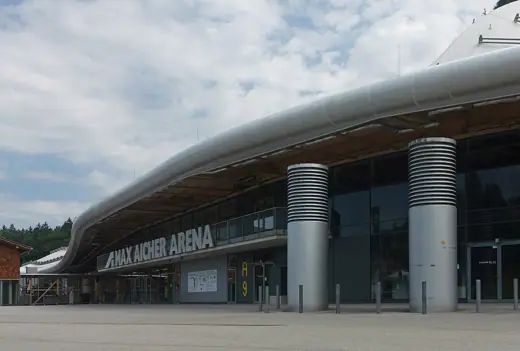
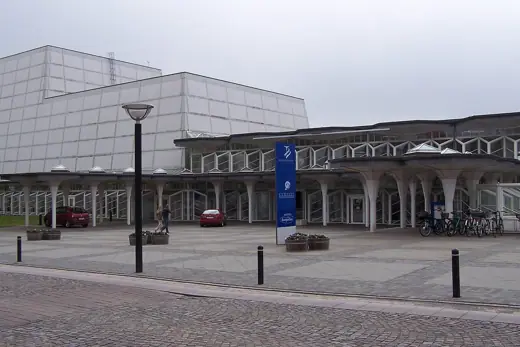
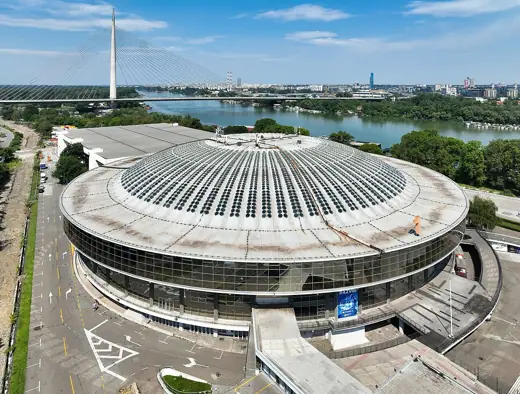
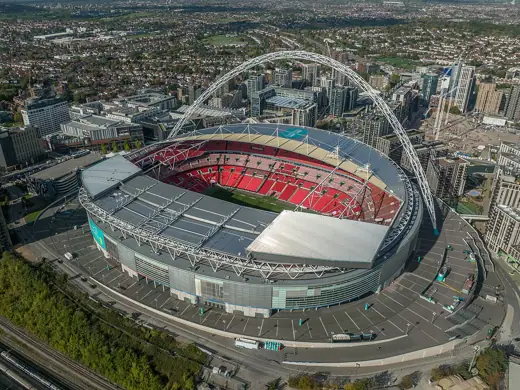
1/4 · Exterior · Grand and Petit Palais from the Eiffel Tower, ParisPhoto: daryl_mitchell from Saskatoon, Saskatchewan, Canada · CC BY-SA 2.0 · source2/4 · ExteriorPhoto: Moonik · CC BY 3.0 · source3/4 · Exterior · Champs-Elysées et Grand-PalaisPhoto: Michael Gaylard · CC BY 2.0 · source4/4 · Plan · Plan of building space allocated for WHMM exhibits, for the 1937 Paris showPhoto: https://wellcomeimages.org/indexplus/obf_images/f5/99/7b71443ae0007a7246645fe4c99b.jpg
Gallery: · CC BY 4.0 · source
Portrait: François Schommer · Public domain · source
About Grand Palais
The Grand Palais des Champs-Élysées (French pronunciation: [ɡʁɑ̃ palɛ de ʃɑ̃z‿elize]; English: Great Palace of the Champs-Élysées), commonly known as the Grand Palais, is a historic site, exhibition hall and museum complex located in the 8th arrondissement of Paris between the Champs-Élysées and the Seine, France, on Avenue Winston-Churchill. Construction of the Grand Palais began in 1897 following the demolition of the Palais de l'Industrie (Palace of Industry) to prepare for the Universal Exposition of 1900. That exposition also produced the adjacent Petit Palais and Pont Alexandre III.
The building was designed to be a large-scale venue for official artistic events. A pediment on the building refers to this function with an inscription that reads, "a monument dedicated by the Republic to the glory of French art." Designed according to Beaux-Arts tastes, the building features ornate stone facades, glass vaults and period innovations that included iron and light steel framing and reinforced concrete.
It is listed as a historic monument (monument historique) by the Ministry of Culture.