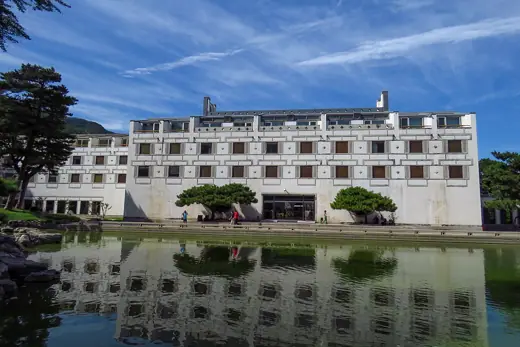
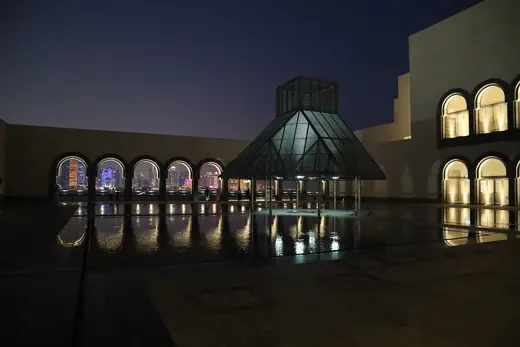
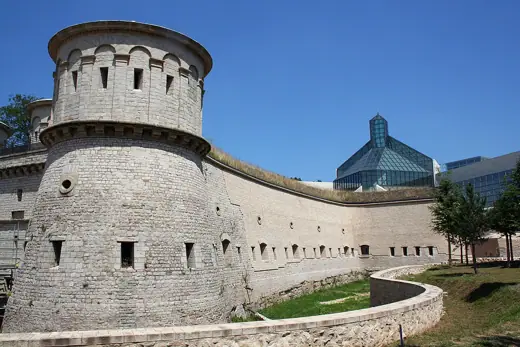
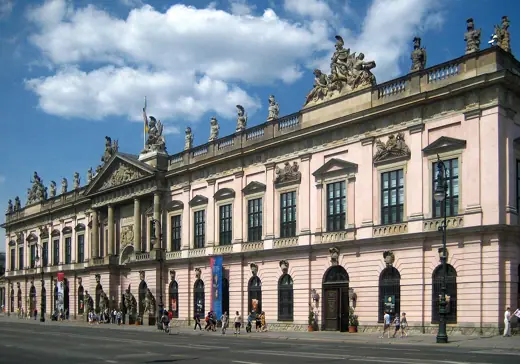
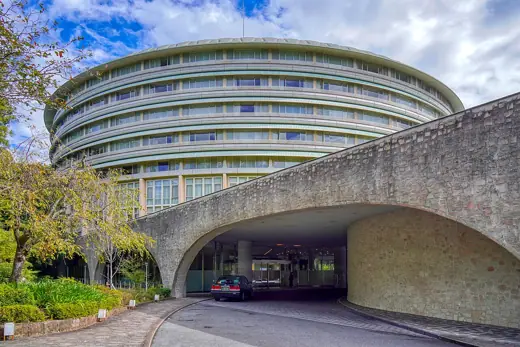
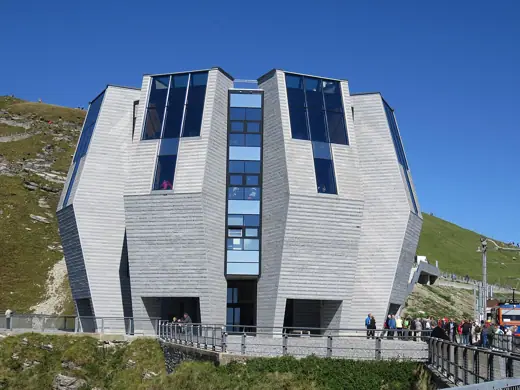
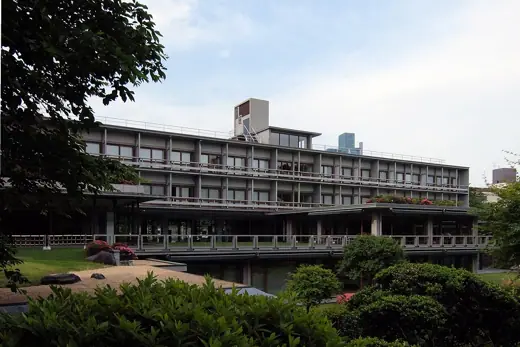
1/6 · Context · Taken from the gardenPhoto: N509FZ · CC BY-SA 4.0 · source2/6 · Exterior · This work of I.MPhoto: N509FZ · CC BY-SA 4.0 · source3/6 · Exterior · Fragrant Hill Hotel, an IPhoto: Gisling · CC BY 3.0 · source4/6 · Interior · The national flag is also visiblePhoto: N509FZ · CC BY-SA 4.0 · source5/6 · Interior · Fragrant Hill Hotel lobby, natural lightingPhoto: Gisling · CC BY 3.0 · source6/6 · Context · Fragrant Hill Hotel gardenPhoto: Gisling · CC BY 3.0 · source
Portrait: original work: Unknown author derivative work: Yekrats · Public domain · source
About Fragrant Hill Hotel
Ieoh Ming Pei ( YOH ming PAY; Chinese: 貝聿銘; pinyin: Bèi Yùmíng; April 26, 1917 – May 16, 2019) was a Chinese-American architect.
Born in Guangzhou into a Chinese family, Pei drew inspiration at an early age from the garden villas at Suzhou, the traditional retreat of the scholar-gentry to which his family belonged. In 1935, he moved to the United States and enrolled in the University of Pennsylvania's architecture school, but quickly transferred to the Massachusetts Institute of Technology. Unhappy with the focus on Beaux-Arts architecture at both schools, he spent his free time researching emerging architects, especially Le Corbusier.
After graduating from MIT, Pei enrolled in the Harvard Graduate School of Design (GSD) where he befriended faculty members Walter Gropius and Marcel Breuer, both of whom had formerly taught at the Bauhaus. Beginning in 1948, Pei worked as an in-house architect for New York City real estate developer William Zeckendorf. In 1955, he established an independent design firm, I. M. Pei & Associates. In 1966, the firm was reorganized as I. M.