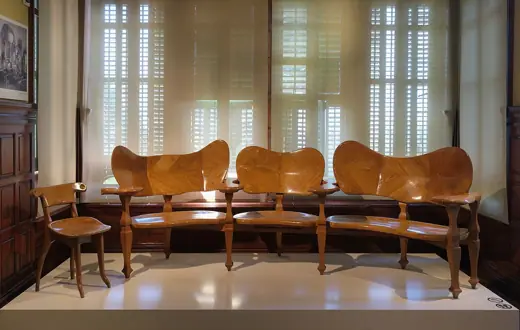
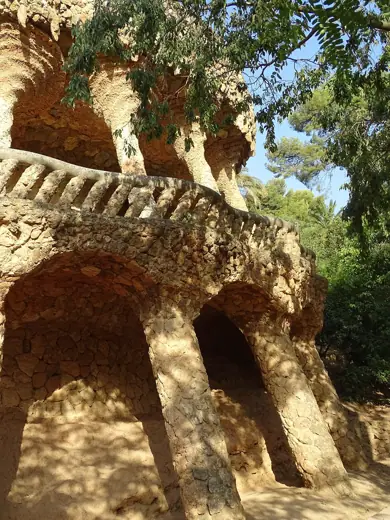
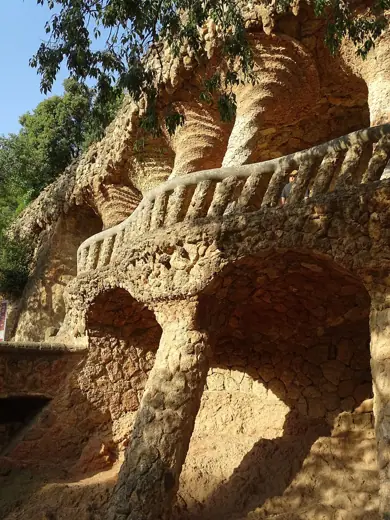
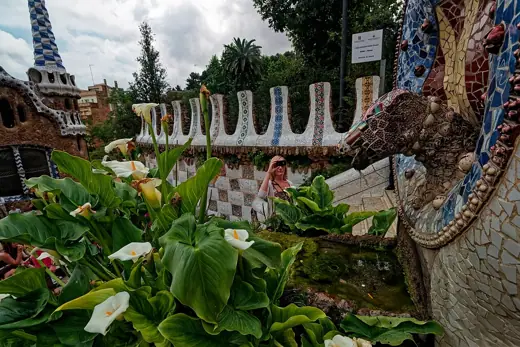
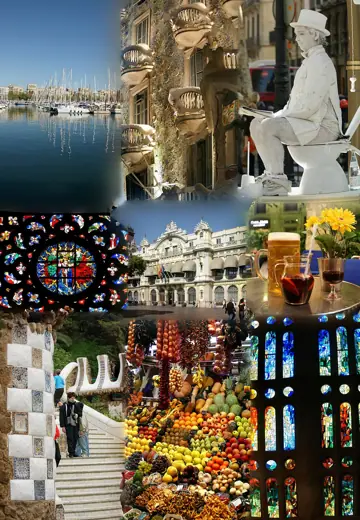
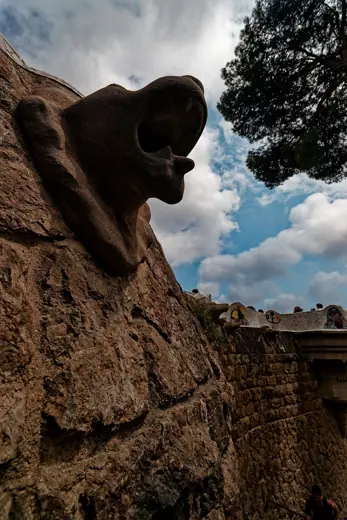
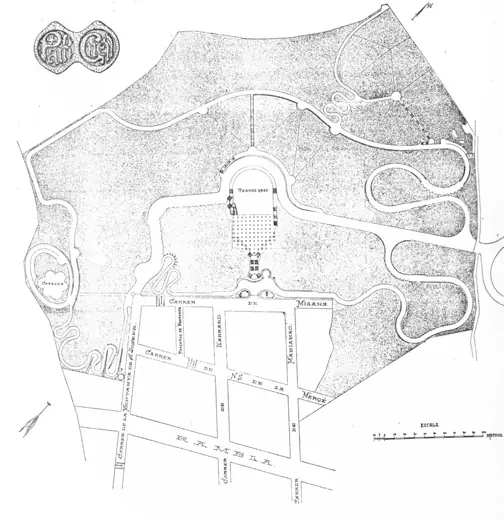
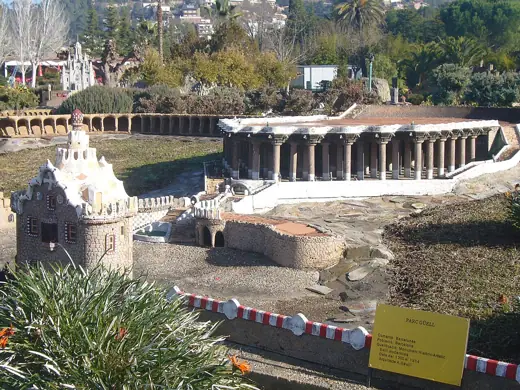
1/8 · Exterior · Chairs by Antonio Gaudi, in Gaudi House Museum, Park Guell, BarcelonaPhoto: Alvesgaspar · CC BY-SA 4.0 · source2/8 · Exterior · Park Güell , BarcelonaPhoto: Ad Meskens
You are free to use this picture for any purpose as long as you credit its author, A · CC BY-SA 4.0 · source3/8 · Exterior · Park Güell , BarcelonaPhoto: Ad Meskens
You are free to use this picture for any purpose as long as you credit its author, A · CC BY-SA 4.0 · source4/8 · Interior · Barcelona - Parc Güell - Main stairs - Middle fountain - Zantedeschia aethiopicaPhoto: Txllxt TxllxT · CC BY-SA 4.0 · source5/8 · InteriorPhoto: böhringer friedrich · CC BY-SA 2.5 · source6/8 · Detail · Barcelona - Parc Güell - View SE on Dog Head GargoylesPhoto: Txllxt TxllxT · CC BY-SA 4.0 · source7/8 · PlanPhoto: Antoni Gaudí · Public domain · source8/8 · Model · Scale model at the "Catalunya en Miniatura" miniature park : Parc GüellPhoto: Jordiferrer · CC BY-SA 3.0 · source
Public space · Art Nouveau
Park Güell
Antoni Gaudí · Barcelona, Spain · 1914
Key featuresLeaning rubble viaducts follow the hillside; a serpentine tiled bench edges a terrace over a column hall.
Park Güell (Catalan: Parc Güell [ˈpaɾɡ ˈɡweʎ]; Spanish: Parque Güell) is a complex of parks and gardens in Barcelona with architectural elements, located in the La Salut neighborhood of the Gràcia district in Barcelona, Catalonia, Spain. It is situated on the southern slope of the Turó del Carmel hill, part of the Collserola mountain range, overlooking the city. The separate Parc del Carmel lies on the northern side of the same hill.
Park Güell reflects Gaudí's distinctive artistic sensibilities and visual language, marking a specific phase in his development—his naturalist period in the first decade of the 20th century. During this time, Gaudí’s study of nature and organic forms led to innovative structural solutions based on geometric analysis.
These geometric insights gave rise to his imaginative and ornamental style. Rooted in Baroque, Gaudí’s work exhibits structural richness and freedom from the rigidity of classical norms. In Park Güell, he introduced curved and undulating benches—a precursor to the style fully realized in the Sagrada Família.