Portrait: Cliché V. et B. Zartarian, autour de 1890. · Public domain · source
About Beylerbeyi Palace
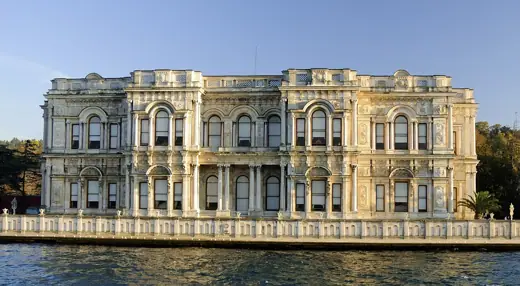
The Beylerbeyi Palace (Turkish: Beylerbeyi Sarayı) is a 19th-century Ottoman palace located in the Beylerbeyi neighborhood of Istanbul’s Üsküdar district, on the Asian shore of the Bosporus. Commissioned by Sultan Abdulaziz and completed between 1861 and 1865, the palace served as a summer residence and a place to host foreign dignitaries. Its design combines European architectural influences, particularly Neo-Baroque, with traditional Ottoman interior decoration. Today, it functions as a museum open to the public.
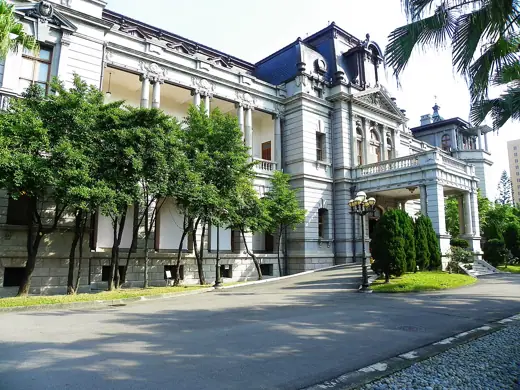
Beylerbeyi Palace was designed by Sarkis Balyan in the Second Empire style. It is simpler in design compared to earlier palaces such as Dolmabahçe and Küçüksu. The palace is best seen from the Bosphorus, where two separate bathing pavilions can be seen: one for the harem (women’s quarters) and one for the selamlık (men’s quarters).
The palace’s interior design blends Western and Eastern influences and reflects features typical of traditional Turkish homes. This three-story building, including the basement, contains 24 rooms and 6 halls. The floors are covered with Egyptian straw mats. The rooms and halls are decorated with Turkish Hereke carpets, French Baccarat crystal chandeliers, and clocks made in Istanbul’s Haliç (Golden Horn) Dockyard from England, France, and Turkey. Additionally, porcelain vases from China, Japan, France, Germany, and Turkey’s Yıldız region add to the palace’s ornate decoration.