

Museum · Brutalism
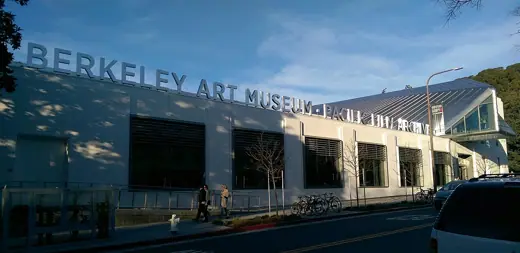
Berkeley Art Museum (original building)
Key featuresConcrete galleries fan out and step down from a central atrium, linked by ramps and cantilevered balconies.
About the building
After a design competition announced in 1964, Mario Ciampi, with his associates Ronald Wagner and Richard Jurasch, designed the Berkeley Art Museum, which opened in 1970. The concrete building is counted among the most inventive Brutalist works, leading visitors in a fan-shaped route down a spiral of partly open galleries. In 1996 it earned Ciampi the AIACC's 25-Year Award. A year later it was judged unsafe in earthquakes, and iron bracing was fitted in 2001. Berkeley made it a city landmark in 2012, and the empty building was added to the National Register in 2014. After seismic strengthening and a redesign, at the end of 2021 it opened again as the Bakar BioEnginuity Hub, a space for young biotech companies, under the name Woo Hon Fai Hall, after the father of the donor David Woo.
Sources: Berkeley Art Museum and Pacific Film Archive · Mario J. Ciampi (Wikipedia)
More with exposed concreteAll 542 →
Find more with
Exposed concrete542 buildings →Circulation188 buildings →Cantilever180 buildings →Museum735 buildings →Each opens every building that shares the idea.