


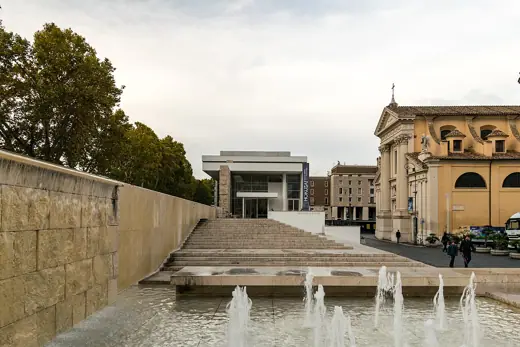


Museum · Late modernism
Ara Pacis Museum

Key featuresA white travertine, plaster and glass pavilion encloses the Augustan altar in a daylit glass hall.
About the building
This museum in Rome shelters the Ara Pacis of Augustus, which was first inaugurated on 30 January 9 BC. The American architect Richard Meier designed it using steel, glass, travertine and plaster, and it is the first large piece of architecture and urban design placed in Rome's historic centre since the Fascist era. It replaced Vittorio Ballio Morpurgo's building of 1938, part of Mussolini's remaking of Piazza Augusto Imperatore. After seven years of work the new museum opened on 21 April 2006, the anniversary of Rome's traditional founding date. Broad glazing and skylights bring light into the central pavilion. White is a hallmark of Meier's work; travertine panels on part of the building replaced the aluminium first planned, after criticism of its effect on the cityscape. Opinion on it is split; The New York Times called it a flop.
Sources: Museum of the Ara Pacis (Wikipedia)
More by Richard MeierAll 13 →
More with steel & glassAll 519 →

Find more with
Steel & glass519 buildings →Stone524 buildings →Light & shadow431 buildings →Museum735 buildings →Each opens every building that shares the idea.
Details
- Place
- Rome, Italy
- Year
- 2006
- Typology
- Museum
- Movement
- Late modernism
- Region
- Europe
Go deeper




See all 9 links


More · MuseumAll 735 →
Portrait: David Shankbone · CC BY 3.0 · source