Pedro Ramírez Vázquez (1919–2013) was a Mexican architect responsible for some of Mexico's most emblematic buildings, known for designs that blended European modernism with pre-Columbian forms, mostly in concrete. Persuaded into architecture by the poet Carlos Pellicer, he graduated from the National Autonomous University of Mexico (UNAM) in 1943. His system for rural schools built thousands of them and was later used by UNICEF. His National Museum of Anthropology in Mexico City (1964) won the grand prize at the São Paulo Biennial. He presided over the organising committee of the 1968 Mexico City Olympics and founded the Universidad Autónoma Metropolitana.
Read moreShow less
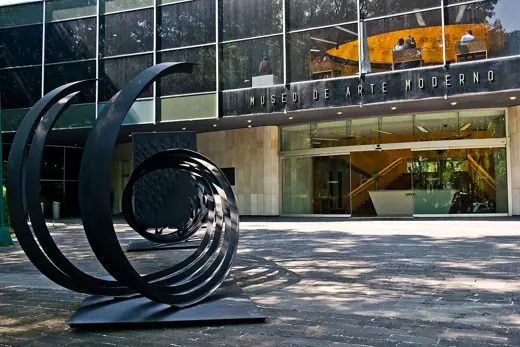
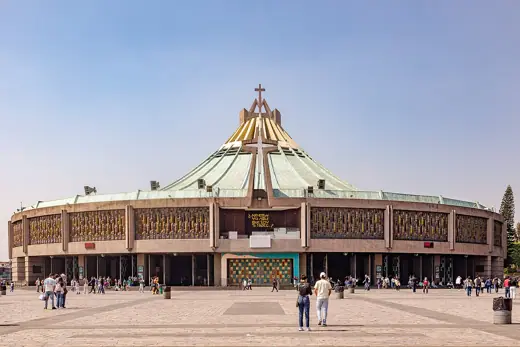
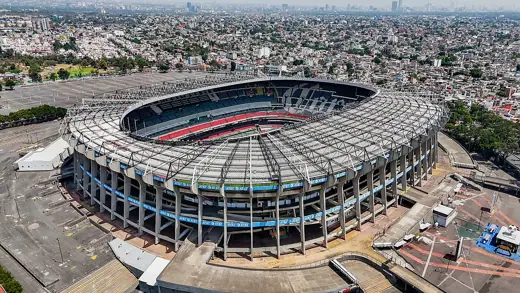
The Museo de Arte Moderno in Chapultepec Park (1964), designed with Rafael Mijares, houses modern Mexican art. The Estadio Azteca (1966), also with Mijares, hosted the football final of the 1968 Olympics; with 87,523 seats it is the largest stadium in Latin America. The Basilica of Our Lady of Guadalupe (1976), designed with a team including José Luis Benlliure, replaced an older, sinking church; its circular form recalls the tent that sheltered the Ark of the Covenant, and its 10,000 seats lie under a self-supporting roof without columns.