The Wazir Khan Mosque is a 17th-century Mughal mosque located in the city of Lahore, Punjab, Pakistan. The mosque was commissioned by the then governor of Lahore, Wazir Khan, during the reign of the Mughal emperor Shah Jahan as a part of an ensemble of buildings that also included the nearby Wazir Khan Hammam baths. Construction of the mosque began in 1634, and was completed in 1641.
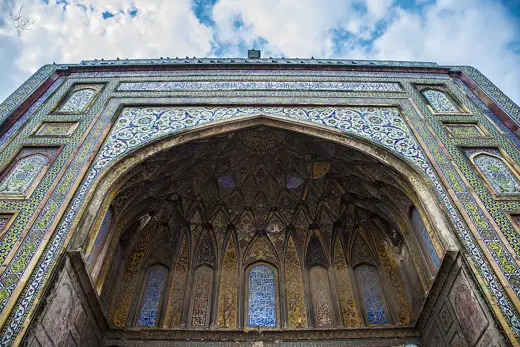
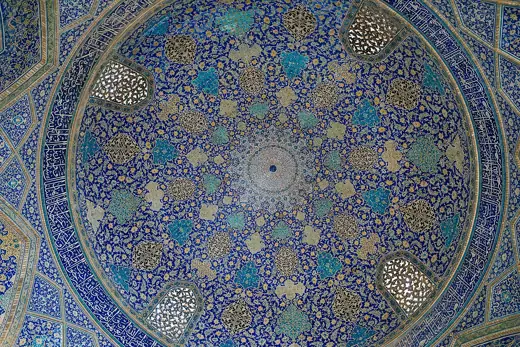
The mosque is built on an elevated plinth, with the main portal opening onto the Wazir Khan Chowk. The outer perimeter of the Wazir Khan Mosque measures 279 feet (85 m) by 159 feet (48 m), with the long axis parallel to the Shahi Guzargah. It was built with bricks laid in kankar lime. The mosque's interior is embellished with frescoes that synthesize Mughal and local Punjabi decorative traditions, while the exterior of the mosque is decorated with intricate Punjabi tile-mosaic known as kashi-kari.
Considered to be the most ornately decorated Mughal-era mosque, Wazir Khan Mosque is noted for its intricate faience tile-work known as kashi-kari, as well as its interior surfaces that are almost entirely embellished with elaborate frescoes. It is on the UNESCO World Heritage Tentative List.