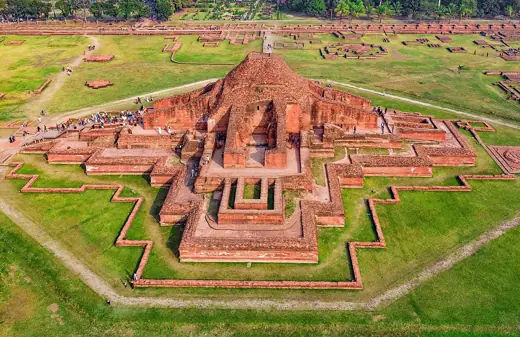
Somapura Mahavihara (Bengali: সোমপুর মহাবিহার, romanized: Sōmpur Môhābihār), also known as Paharpur Buddhist Vihara (Bengali: পাহাড়পুর বৌদ্ধবিহার, romanized: Pāhāṛpur Bôuddhôbihār), is a major Mahayana and Vajrayana Buddhist monastery (mahavihara) in Paharpur, Badalgachhi, Naogaon, Bangladesh. It is among the best known Buddhist viharas in the Indian subcontinent and one of the most important archaeological sites in the country. It was designated as a UNESCO World Heritage Site in 1985.
The quadrangular structure consists of 177 cells and a traditional Buddhist stupa in the centre. The rooms were used by the monks for accommodation and meditation. In addition to the large number of stupas and shrines of various sizes and shapes, terracotta plaques, stone sculptures, inscriptions, coins, ceramics etc, have been discovered in this site.
The site houses the architectural remains of a vast Buddhist monastery, Somapura Mahavihara, covering 11 hectares (27 acres). It was an important intellectual centre for Dharmic Traditions such as Buddhists, Jains and Hindus alike. The 8.5-hectare (21-acre) complex has 177 cells, viharas, numerous stupas, temples and a number of other ancillary buildings. The outside walls with ornamental terracotta plaques still display the influence of these three religions.