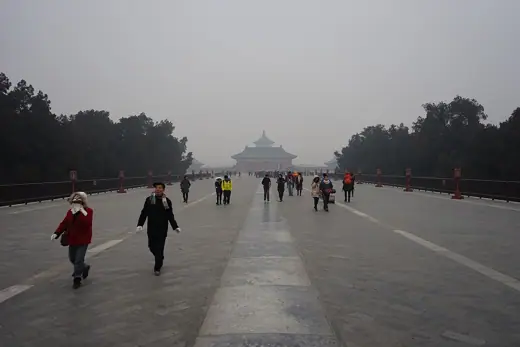
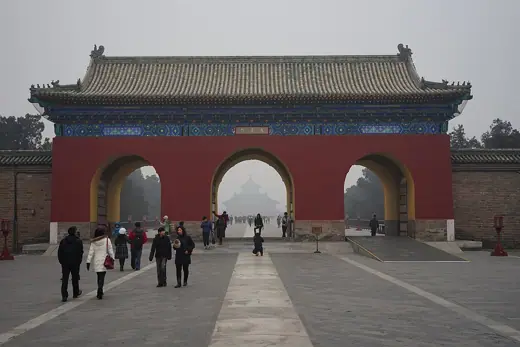
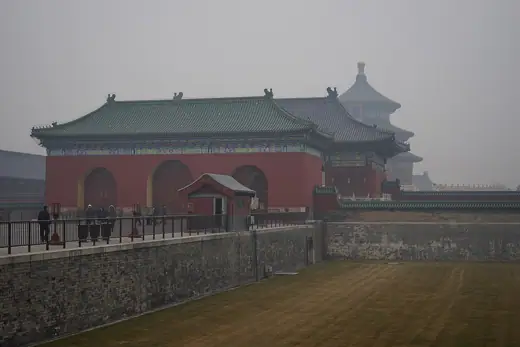
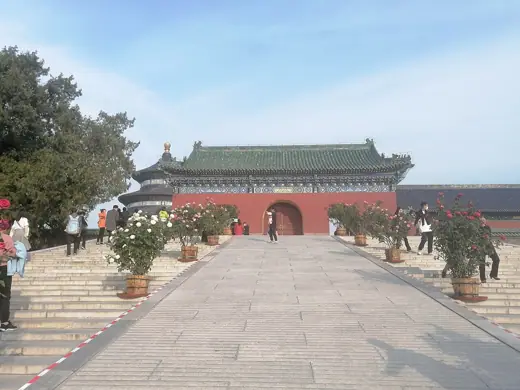
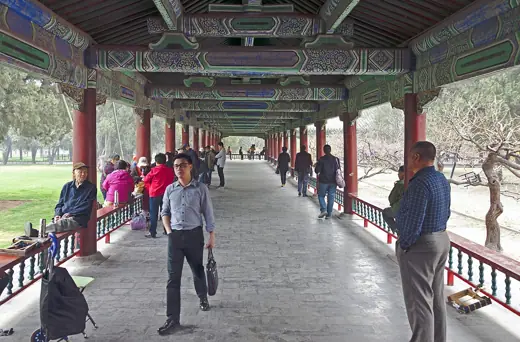
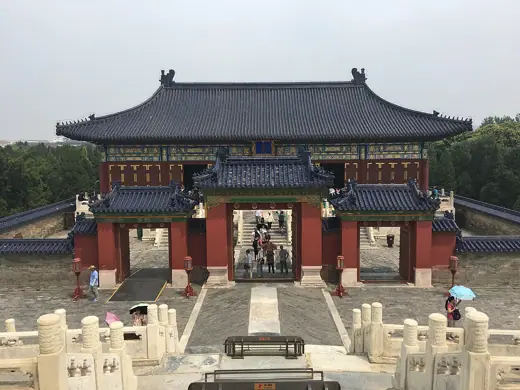
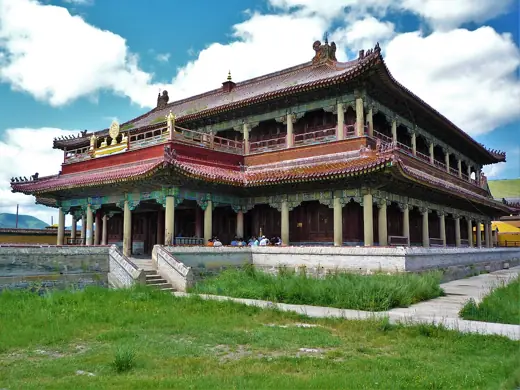
1/6 · Exterior · before the Temple of HeavenPhoto: Jan Bockaert · CC BY-SA 2.0 · source2/6 · ExteriorPhoto: Jan Bockaert · CC BY-SA 2.0 · source3/6 · ExteriorPhoto: Jan Bockaert · CC BY-SA 2.0 · source4/6 · ExteriorPhoto: Yumeto · CC BY-SA 4.0 · source5/6 · Interior · People, primarily locals, in the Long Corridor at the Temple of Heaven Park in BeijingPhoto: Daniel Case · CC BY-SA 3.0 · source6/6 · Interior · View towards the gate to the Imperial Hall of Heaven (Beijing)Photo: Bjoertvedt · CC BY-SA 4.0 · source
Religious · Historic precedent
Temple of Heaven
Ming imperial builders · Beijing, China · 1420
Key featuresTriple-roofed circular timber hall on a three-tier marble terrace, reached by a raised axial walkway.
The Temple of Heaven (simplified Chinese: 天坛; traditional Chinese: 天壇; pinyin: Tiāntán) is a complex of imperial religious Confucian buildings situated in the southeastern part of central Beijing. The complex was visited by the Emperors of the Ming and then later restored by the Qing dynasties for annual ceremonies of prayer to Heaven for a good harvest and other seasonal rites. The Temple of Heaven was inscribed as a World Heritage site in 1998 and was described as "a masterpiece of architecture and landscape design which simply and graphically illustrates a cosmogony of great importance for the evolution of one of the world's great civilizations..." as the "symbolic layout and design of the Temple of Heaven had a profound influence on architecture and planning in the Far East over many centuries."




.jpg)

