




Culture & sport · Late modernism
Seoul Olympic Stadium

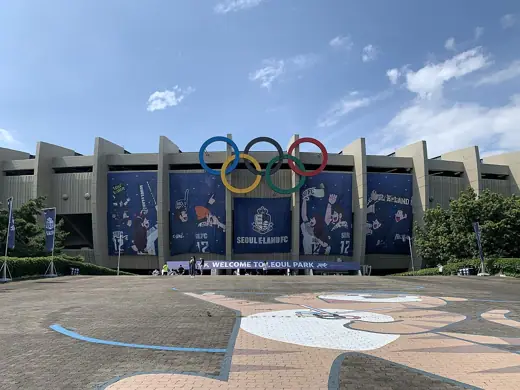
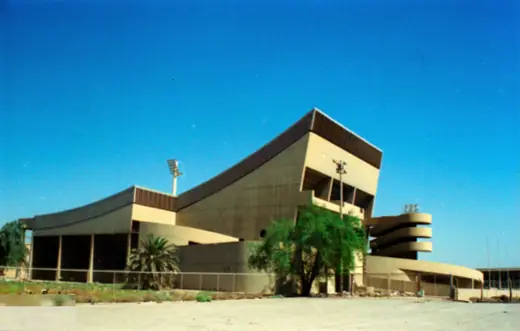
Key featuresIts rim rises and dips like the curve of a Joseon white porcelain vase, over a two-tier bowl.
About the building
Kim Swoo-geun designed this multi-purpose stadium, whose profile follows the graceful curves of Joseon white porcelain. It was the main venue built for the 1986 Asian Games, the tenth, and for the 1988 Summer Olympics, and it anchors the Seoul Sports Complex in Songpa District, south of the Han River in the city's southeast. Planned first for the Asian Games, it became the centrepiece of the Olympic plans once Seoul won the right to host them in September 1981. It officially opened on 29 September 1984. Spectators sit on two tiers, 69,950 in all, beneath a roof that covers part of the stands. It is South Korea's largest stadium. At the Olympics it staged athletics, the football finals, the individual show-jumping final, and both the opening and the closing ceremony.
Sources: Seoul Olympic Stadium · Kim Swoo-geun (Wikipedia)
More by Kim Swoo-geunAll 7 →
More with sculptural formAll 769 →
Find more with
Sculptural form769 buildings →Monumentality909 buildings →Exposed concrete542 buildings →Culture & sport614 buildings →Each opens every building that shares the idea.
Details
- Place
- Seoul, South Korea
- Year
- 1984
- Typology
- Culture & sport
- Movement
- Late modernism
- Region
- East Asia
Go deeper





See all 7 links

More · Culture & sportAll 614 →
Portrait: 조선일보 · Public domain · source