

Culture & sport · Historic precedent
Saigon Opera House
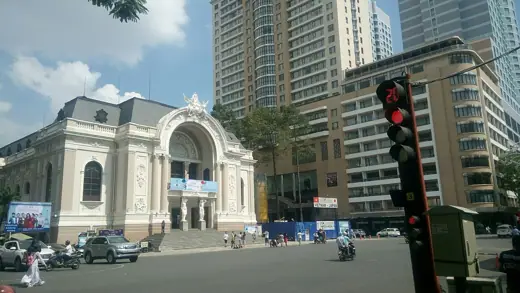
Key featuresFlamboyant Third Republic style, with a facade modelled on the Petit Palais in Paris.
About the building
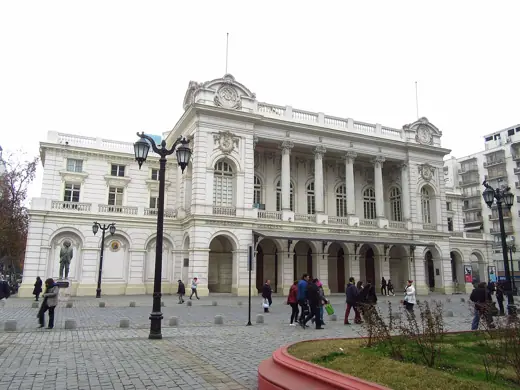
The Saigon Opera House is one of Vietnam's French colonial opera houses, like those in Hanoi and Haiphong. Its character comes from the architect Félix Olivier; Ernest Guichard and Eugène Ferret, also architects, supervised the work. Work on the new theatre began in 1898 on the site of an older one and was complete by 1 January 1900. Its style follows the Flamboyant manner of France's Third Republic, and the front is shaped like the Petit Palais, built in France that same year. Its main floor and two balconies once held 1,800. In 1943 statues, carvings and other ornament were stripped off the front to make it look more up to date. From 1956 to 1967 the theatre, then seating 500, housed the single-chamber National Assembly. For Saigon's 300th anniversary in 1998, the front was restored.
Sources: Ho Chi Minh City Opera House (Wikipedia)
More with axisAll 319 →
Find more with
Axis319 buildings →Detail553 buildings →Monumentality909 buildings →Culture & sport614 buildings →Each opens every building that shares the idea.
Details
- Architect
- Félix Olivier
- Place
- Ho Chi Minh City, Vietnam
- Year
- 1900
- Typology
- Culture & sport
- Movement
- Historic precedent
- Region
- Southeast Asia