




Public space · Regionalism
Rock Garden of Chandigarh
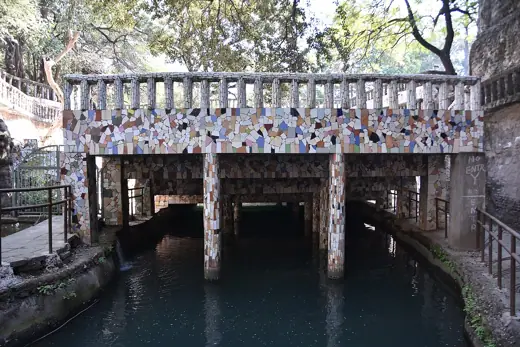
Key featuresOutdoor rooms and passages built from broken ceramics, rubble and scrap, linked by narrow paths.
About the building
Nek Chand Saini, a government official, began the Rock Garden of Chandigarh in secret in his spare time in 1957. He collected materials from demolition sites and chose a forested gorge near Sukhna Lake for his vision of a divine kingdom, Sukrani. The work broke the law, but stayed hidden until officials found it in 1975. By then it had grown into a set of linked courtyards crowded with hundreds of concrete dancers, musicians and animals clad in pottery. Chand built up each form in a cement and sand mix from recycled matter, then finished it in burnished pure cement combined with waste such as bangles, broken glass, crockery and slag. When demolition loomed, he won public opinion over, and the garden opened to all in 1986. It is now praised as a pioneer of environmental art and recycling.
Sources: Rock Garden of Chandigarh · Nek Chand (Wikipedia)
More with reclaimed materialAll 26 →
Find more with
Reclaimed material26 buildings →Landscape736 buildings →Promenade139 buildings →Public space88 buildings →Each opens every building that shares the idea.
Details
- Architect
- Nek Chand
- Place
- Chandigarh, India
- Year
- 1976
- Typology
- Public space
- Movement
- Regionalism
- Region
- South Asia

Go deeper





See all 8 links


More · Public spaceAll 88 →
Portrait: Forlornandshorn · CC0 · source