




Palace · Modernism
Republican Palace, Baghdad
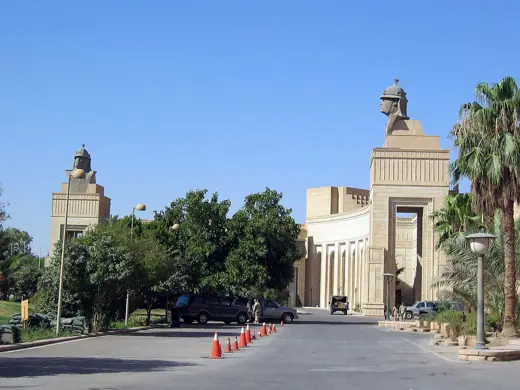
Key featuresModernist palace first designed as a central domed section with two wings; fountain in front part of original design.
About the building
In the 1950s King Faisal II of Iraq commissioned this Baghdad palace to replace the Al-Rehab Palace as his main royal home after his planned wedding to Egyptian Princess Sabiha Fazila Khanim Sultan. Its architect was J. Brian Cooper, from Birmingham in England, known for modernist work. A watercolour of the scheme by Lawrence Wright shows the Royal Palace as first planned: just a domed central block and two wings. The king never lived there, since he was killed in the 1958 coup before the wedding. Completed in the early 1960s, the palace held the Iraqi Presidency's offices from 1963, under Abdul Salam Arif, to 2003, under Saddam Hussein. Everything beyond the original three parts was added in Saddam's time, along with big portrait heads in bronze on the roof. It was refurbished for the Arab League Summit of 2011.
Sources: Republican Palace, Baghdad (Wikipedia)
More with monumentalityAll 909 →
Find more with
Monumentality909 buildings →Axis319 buildings →Stone524 buildings →Palace44 buildings →Each opens every building that shares the idea.
Details
- Architect
- J. Brian Cooper
- Place
- Baghdad, Iraq
- Year
- early 1960s
- Typology
- Palace
- Movement
- Modernism
- Region
- Middle East





