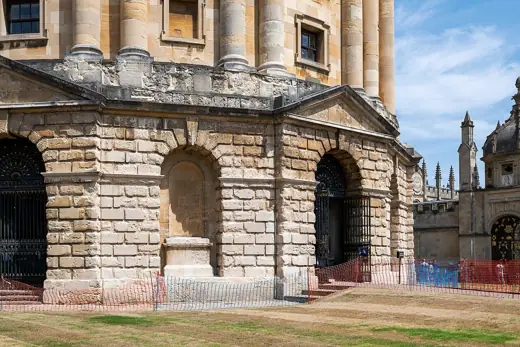
1/6 · Exterior · Oxford: RADCLIFFE CAMERAPhoto: Tilman2007 · CC BY-SA 4.0 · source2/6 · Exterior · Radcliffe Camera, Oxford in 2019Photo: Vysotsky · CC BY-SA 4.0 · source3/6 · Exterior · All Souls and the CameraPhoto: Bill Tyne from Oxford, England · CC BY-SA 2.0 · source4/6 · ExteriorPhoto: Julian Herzog ( Website ) · CC BY 4.0 · source5/6 · Interior · Upper Camera reading room from the gallery, Radcliffe Camera, Oxford in October 2022Photo: Gazamp · CC BY-SA 4.0 · source6/6 · ModelPhoto: Unknown artist Unknown artist · Public domain · source
The Radcliffe Camera (colloquially known as the "Rad Cam" or "The Camera"; from Latin camera, meaning 'chamber') is a building of the University of Oxford, England, designed by James Gibbs in a Baroque style and built in 1737–49 to house a library, ultimately becoming a reading room of the Bodleian Library, not open to the public, after the original library moved out.
The building is the earliest example in England of a circular library. It is built in three main stages externally and two stories internally, the upper one containing a gallery. The ground stage is heavily rusticated and has a series of eight pedimented projections alternating with niches. The central stage is divided into bays by coupled Corinthian columns supporting the continuous entablature. The pedimented windows stand above mezzanine openings, reflecting the interior arrangement. The top stage is a lanterned dome on an octagonal drum, with a balustraded parapet with vases.
The construction used local stone from Headington and Burford, which was then ashlar faced. The dome and cupola are covered with lead. Inside, the original walls and dome were distempered but this was later removed, revealing the decorations to be carved in stone. Only the decorative work of the dome is plaster.