




Infrastructure · Historic precedent
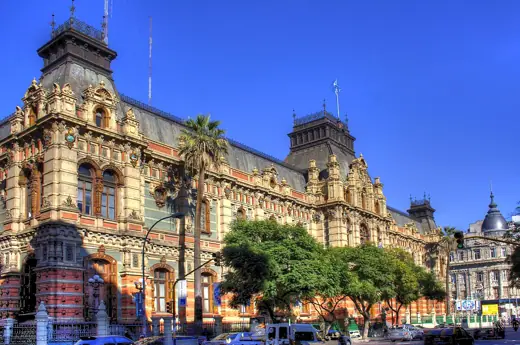
Palacio de Aguas Corrientes
Key featuresWater-pumping palace covered in about 300,000 majolica tiles.
About the building
This palace is a water pumping station. Olaf Boye, an architect from Norway, designed it in 1877 together with two engineers, Carlos Nyströmer from Sweden and John Bateman from Britain. Work began in 1887; it opened in 1894. Inside, twelve tanks over three floors held 72,000 tons of water; the building stands on 180 columns and an iron frame made in Belgium. The French Renaissance exterior is faced with more than 300,000 glazed terracotta tiles in many colours, imported from the British maker Royal Doulton, under a tin mansard roof bearing the shields of what were then Argentina's 14 provinces. It also housed the head office of state-owned Obras Sanitarias de la Nación. In 1978 the pumps were taken out and a museum moved in. One of Argentina's leading eclectic buildings, it became a National Historic Monument in 1989.
Sources: Palacio de Aguas Corrientes (Wikipedia)
More with facade as skinAll 828 →

Find more with
Facade as skin828 buildings →Structure as expression668 buildings →Water306 buildings →Infrastructure223 buildings →Each opens every building that shares the idea.
Details
- Architect
- Olaf Boye
- Place
- Buenos Aires, Argentina
- Year
- 1894
- Typology
- Infrastructure
- Movement
- Historic precedent
- Region
- Americas

Go deeper





See all 8 links


More · InfrastructureAll 223 →



Portrait: Unknown author · Public domain · source