




Civic · Modernism
Oslo City Hall
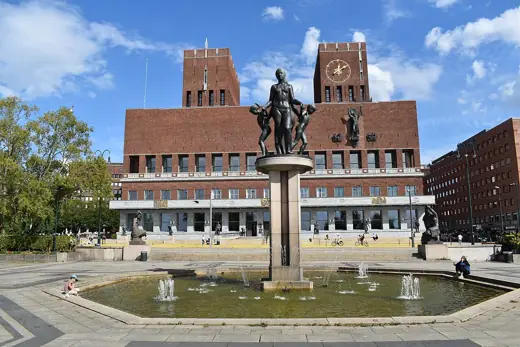
Key featuresTwin brick towers flank a large mural-lined hall facing the harbour.
About the building
Home to Oslo's city council, its administration and other municipal bodies, Oslo City Hall was built between 1931 and 1950, with a pause during the Second World War. Arnstein Arneberg and Magnus Poulsson won in 1918 with a design that clearly drew on Stockholm City Hall. By their final draft of 1930 it had changed a great deal under the influence of functionalism, most visibly through two added office towers, which rise 63 and 66 metres. The walls are red brick, laid with bricks larger than was usual at the time and close in size to medieval ones. The main hall, decorated by Henrik Sørensen and Alf Rolfsen, measures 31 by 39 metres and rises about 21 metres. By the 1950 opening the style had fallen out of favour. The Nobel Peace Prize ceremony is held here every December.
Sources: Oslo City Hall (Wikipedia)
More with brickAll 332 →
Find more with
Brick332 buildings →Monumentality909 buildings →Public space617 buildings →Civic375 buildings →Each opens every building that shares the idea.
Details
- Architect
- Arnstein Arneberg, Magnus Poulsson
- Place
- Oslo, Norway
- Year
- 1950
- Typology
- Civic
- Movement
- Modernism
- Region
- Europe

Go deeper





More · CivicAll 375 →

Portrait: Unknown asuthor · Public domain · source