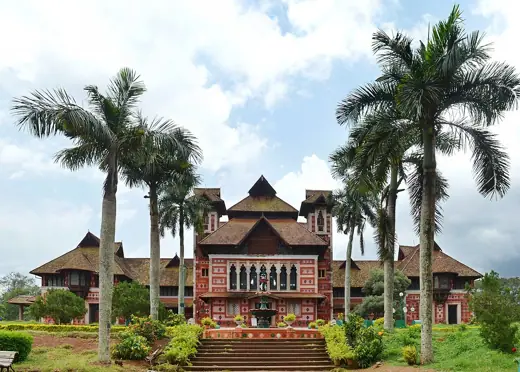
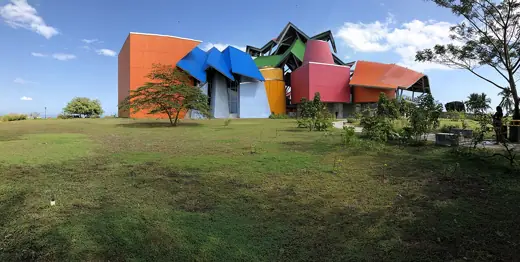
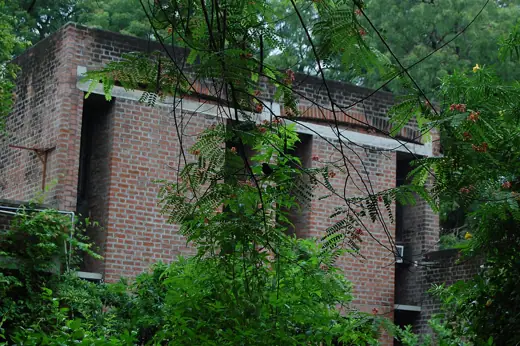
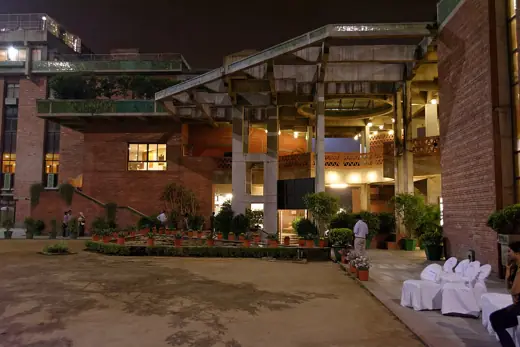
1/6 · Exterior · Napier Museum ThiruvananthapuranPhoto: Augustus Binu / www.dreamsparrow.net / facebook · CC BY-SA 3.0 · source2/6 · ExteriorPhoto: Vis M · CC BY-SA 4.0 · source3/6 · ExteriorPhoto: Vis M · CC BY-SA 4.0 · source4/6 · Exterior · The Napier Museum is an art and natural history museum situated in Thiruvananthapuram, IndiaPhoto: Shagil Muzhappilangad · CC BY-SA 4.0 · source5/6 · Interior · This is the walkway leading up to the museumPhoto: Dipshikha Sinha · CC BY-SA 4.0 · source6/6 · DetailPhoto: Vis M · CC BY-SA 4.0 · source
Key featuresKerala gabled roofs and polychrome brick walls adapted for natural ventilation of the halls.
About the building
The Napier Museum in Thiruvananthapuram holds art and natural history collections. Its building, by Robert Chisholm, was finished in 1880, the year the museum opened its doors, and it is named after the governor of the day, Francis Napier, 10th Lord Napier. The Indo-Saracenic design mixes influences from Indian, Chinese, Kerala and Mughal architecture, and is known for its ornament. Among its features are a Gothic roof and minarets. There is no air conditioning, and good natural ventilation has meant none was needed; by contrast, an annex added in 2016 with few windows or openings has suffered from mould, insects and corrosion. The museum also has a bandstand with hidden speakers and special acoustics.
Portrait: Unknown author from studio of Elliott & Fry · Public domain · source
About Napier Museum
The Napier Museum is an art and natural history museum situated in Thiruvananthapuram, India.
Some of the building features include a gothic roof and minarets. The Napier Museum, a landmark of the city, is noted for its unique ornamentation and architectural style, which is influenced by Indian, Chinese, Kerala and Mughal schools of architecture.
The museum has a bandstand with concealed speakers and special acoustics. In the old days, the band of the Travancore Nair Brigade would play there every Friday. Later, the police band would play on Saturdays.
The museum owns a garden which has many varieties of flowers and trees. It also shelters the oldest living rubber tree in Kerala. It was brought there in 1876 from Ceylon and planted in the museum grounds by Visakham Thirunal.
The museum grounds are home to the Thiruvananthapuram Zoo, one of the oldest zoological gardens in India. The zoo was established in 1857 over 55 acres (220,000 m2) of land. It also contains the Sree Chitra Art Gallery, a separate art gallery established in 1935.
The set of museums, along with the zoo, are managed by the Department of Museums and Zoos, a branch of the Department of Cultural Affairs of Kerala.