




Museum · Historic precedent
Mole Antonelliana
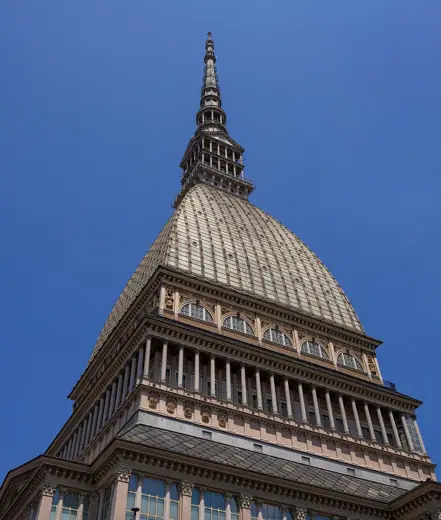
Key featuresA steep square masonry dome rises from a temple-like base into a slender spire.
About the building
The Mole Antonelliana, a major landmark in Turin, takes its name from its architect, Alessandro Antonelli. Work began in 1863, shortly after Italian unification, and ended in 1889, after Antonelli's death. It was first conceived as a synagogue, but the people of Turin, having watched it climb, called on the city to take over the project, and the city did so. With no steel girder frame, it is the world's tallest building of unreinforced brick. Under the atrium, the ground-floor ceiling uses Catalan vaults, rare in Italy but common in Spain, where they began. On 23 May 1953 a cloudburst and a tornado tore away the top 47 metres of the spire; it was rebuilt in metal faced with stone in 1961. Today the building holds the National Museum of Cinema and is thought to be the tallest museum anywhere.
Sources: Mole Antonelliana (Wikipedia)
More with structure as expressionAll 668 →


Find more with
Structure as expression668 buildings →Geometry1061 buildings →Monumentality909 buildings →Museum735 buildings →Each opens every building that shares the idea.
Details
- Architect
- Alessandro Antonelli
- Place
- Turin, Italy
- Year
- 1889
- Typology
- Museum
- Movement
- Historic precedent
- Region
- Europe

Go deeper





More · MuseumAll 735 →


Portrait: Ambrosetti · Public domain · source